
Your Dental Website Has One Job
She’d been watching the practice on Instagram for two weeks.
Not obsessively, just naturally. A video about Invisalign came up in her feed. Then a reel about what to expect at a first visit. She commented once and got a genuine reply. By the time she decided she was ready to book a consultation, she felt like she already knew this practice.
She clicked the link in the bio and landed on the website. There was no video. There was a stock photo of a woman who was clearly a model, not a patient. She scrolled, looking for a way to book, and found a “Contact Us” page buried in the footer with a seven field form and no hint of when anyone would get back to her.
She closed the tab and called a different practice.
Two weeks of trust, built one video at a time, erased in under a minute. And here’s what makes this failure so dangerous: it’s invisible. The social metrics look fine. The website traffic looks fine. Nobody tracks the patients who showed up warm and left cold.
The $30,000 brochure problem
I’ve reviewed a lot of dental websites, and I can tell you who most of them were really built for. Other dentists.
Drone footage of the building. Clinical photography that showcases the margins on a crown instead of the human being wearing it. A navigation menu organized the way a dental school would organize it. A bio that leads with graduation year and lists every association membership, and never once tells the patient why this doctor chose this work.
These sites often cost $30,000 or more. And they fail at the only job that matters, because the person landing on your homepage is not a colleague evaluating your credentials. She’s someone who has been putting off this appointment for two years. She watched your video at midnight and finally felt ready. She needs to feel, in the first ten seconds, that she’s in the right place. Then she needs one obvious, frictionless way to take the next step.
Your website has one job: turn a warm visitor into a booked patient. Everything else is art.
Video above the fold, booking button to the right
At Digital Floss we build every homepage the same way, and dentists sometimes push back on it, so let me tell you exactly why we do it.
I spent eight years in Russell Brunson’s Inner Circle studying conversion psychology, and one pattern shows up over and over. We read left to right, and we process emotion before we process text. So the first visible section of the homepage gets a real video of the doctor on the left, a real person talking about why they do this work, and a prominent booking form on the right.
The patient watches the video and feels something first. Then her eye travels naturally to the right, where the next step is waiting. In that order, the booking button doesn’t feel like a commercial interruption. It feels like the obvious thing to do next.
Most dental websites aren’t built like that. Most dental websites are glorified business cards. They exist, they look respectable, and they book nothing. When we moved one of our client practices onto this structure, 900 website visits in a thirty day window produced 42 click to call actions and 22 lead form submissions, with no ad spend running behind it. Those are our client’s real numbers, not a projection.
The conversion leak nobody talks about
One technical decision quietly costs practices more booked appointments than almost anything else: the booking link that opens somebody else’s website.
When a patient clicks “Book Appointment” and gets bounced to a third party scheduling portal with different branding, she experiences a small break in trust at the exact moment she was ready to commit. Some patients push through it. Many hesitate, get distracted, and never come back.
Booking should happen inside your site, feel like your practice, and land the appointment directly in your systems, with a real follow up in minutes. Every moment a patient has to leave your website to take action is a moment she may not come back from.
Your website is also talking to AI
Everything above is about the human visitor. But in 2026 your website has a second reader, and it never sleeps.
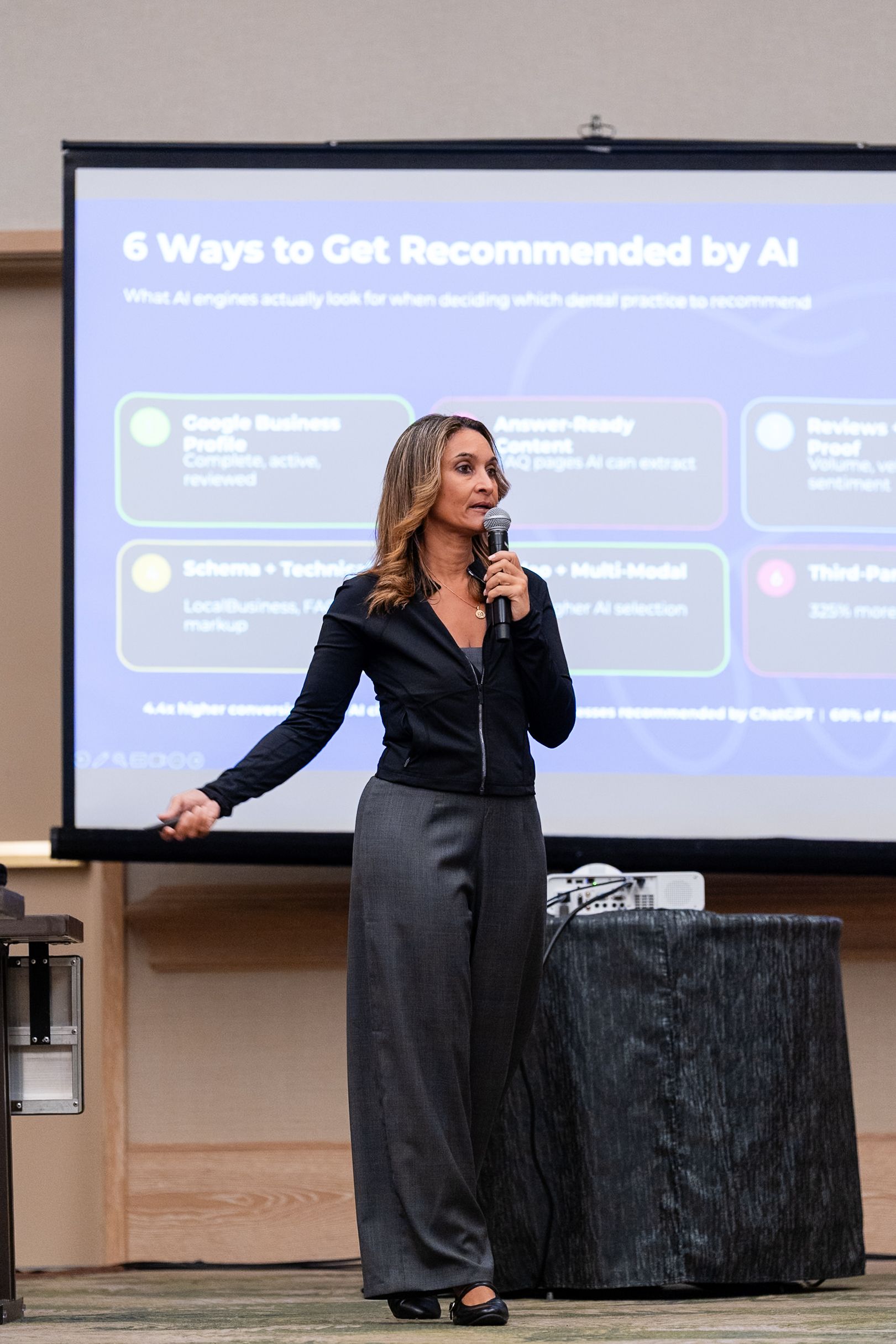
When a patient asks ChatGPT or Google for a dentist, the AI systems doing the recommending pull heavily from website content, and FAQ sections are one of their favorite sources. A site with real FAQ pages, written the way patients ask questions, gives AI exactly what it needs to recommend you with confidence. A site that hasn’t been updated since 2021 gets silently skipped.
One more thing AI notices that most practice owners never think about: consistency. If your Instagram sounds like a warm human being and your website reads like a medical journal abstract, AI reads them as two different entities, and its confidence in you drops. Your website should sound like the same practice that shows up in your reels. So should your Google Business Profile. One voice, everywhere.
I’ve written separately about how AI decides which dentists to recommend, and if that topic is new to you, start there. The short version is that your website is no longer just your lobby. It’s your application.
What to check on your own site this week
Pull up your homepage on your phone and answer honestly. Is there a real video of you or your team visible before any scrolling? Is there a booking button in that same first screen, or does the patient have to hunt? Does booking happen on your site or on someone else’s? Do your service pages answer the questions patients type into ChatGPT, or the questions a dental school would ask? And does the site sound like the same practice a patient just watched on Instagram?
Five questions. If you answered no to two or more, your marketing isn’t failing at the top of the funnel. It’s failing at the front door.
Frequently Asked Questions
What should be above the fold on a dental website?
A real video of the doctor or team on the left, and a prominent booking form or button on the right, both visible without scrolling. People process emotion before text and read left to right, so the video builds connection first and the booking action is the natural next step. Stock photos and slogans in that space waste the most valuable real estate on your site.
Do dental websites really need video?
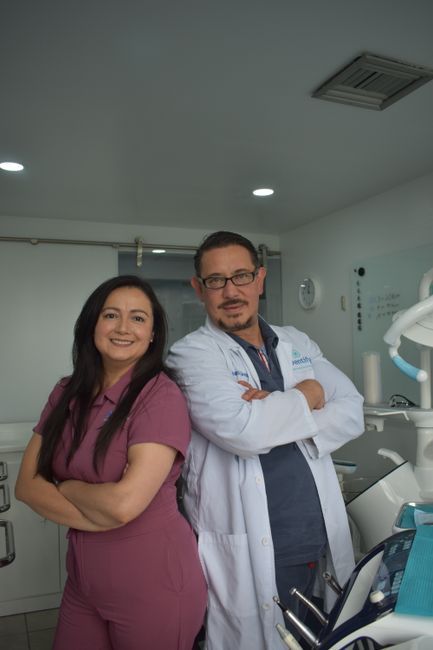
Yes. Video is the only medium that answers the questions patients are really asking, like whether you seem warm and whether they’d feel safe in your chair. It’s also the highest trust content type for the AI systems that now recommend dentists, because a real doctor talking in a real operatory is hard to fake. The video doesn’t need to be polished. It needs to be genuinely you.
How many form fields should a booking form have?
Three or four at most: name, phone number, and what the patient is looking for. Every additional field costs you completed forms. Detail gathering belongs in the follow up conversation, which should happen within minutes of the form being submitted.
Why does my website get traffic but no appointments?
Because traffic and conversion are different jobs. The most common causes are no video above the fold, no visible booking button on the first screen, a booking flow that redirects patients to a third party site, and copy written to impress colleagues instead of reassuring patients. Fixing the first screen of the homepage usually moves the numbers more than any redesign of the rest of the site.
Does my website affect whether AI recommends my practice?
Directly. AI systems like ChatGPT and Google AI Overviews pull from your service pages and FAQ content when they decide which practices to recommend, and they check that your website, social profiles, and business listings tell one consistent story. A stale or inconsistent site lowers AI’s confidence in recommending you, no matter how good your reviews are.
See what your website is doing right now
You don’t have to guess where you stand.
Run your free FlossIQ report at digitalfloss.com. In sixty seconds you’ll see your website performance, your AI visibility, and your real competitive position in your own zip code, side by side with the practices down the street. The audit shows you where you stand. What you do next is up to you.