
Google and Instagram Just Changed the Game: What This Means for Dental Marketing
Team • November 11, 2025
The World of Digital Visibility Just Shifted — And If You’re a Dental Practice, You’ll Want to Pay Attention
The World of Digital Visibility Just Shifted — And If You’re a Dental Practice, You’ll Want to Pay Attention
Two announcements this year have quietly redefined how patients find you online.
What Changed
July 10, 2025 — Instagram Posts Now Show Up on Google
Instagram officially began allowing public professional-account content (Reels, carousels, and static images) to be indexed and appear directly in Google search results. That means your Instagram posts are no longer trapped inside the app — they’re now searchable assets that can appear when someone Googles “veneers near me” or “dental implant cost Fort Lauderdale.” (Sources: Social Snowball, Forbes, Medium)
September 17, 2025 — Google Discover Adds Social Feeds
Google then announced that its Discover feed (the content that shows up under the Google app and on Android home screens) will now surface posts from Instagram, X, and YouTube Shorts — and even include Follow buttons for creators and brands. (Sources: Google Blog, Search Engine Journal)
Why It Matters for Your Dental Practice
Instagram content now acts like mini landing pages that Google can display. Each Reel or post becomes an opportunity for search discovery — a chance for new patients to find you before they ever click on your website.
Imagine this: a short Reel titled “How Much Do Dental Implants Cost in Fort Lauderdale?” tagged correctly with your city and keywords can now rank on Google, putting your practice in front of patients while they’re actively searching.
And with the Discover feed update, you’re no longer limited to people searching — you’re showing up in the feeds of people who might not even know they need your services yet. It’s a new layer of awareness and reach you can’t afford to ignore. (Source: Overdrive)
Your 2025 Dental Marketing Playbook
Here’s how to make sure your practice — and your agency content — are ready to capitalize on this shift.
1. Enable Search Indexing
Confirm your Instagram account is:
- A Professional Account (Business or Creator)
- Public and set to allow search-engine indexing
- Age-appropriate (18+)
(Source: Social Snowball)
2. Treat Every Post Like SEO Content
Write captions with search intent in mind: include your service, your city, and what the post answers.
Example: “Dental implant cost in Fort Lauderdale – what to expect.”
3. Optimize Your Alt Text
When uploading a photo or video, fill in the alt text.
Example: “Dentist placing titanium dental implant in Fort Lauderdale patient.”
This helps Google understand and rank your content.
(Source: Medium)
4. Use Location Tags
Tag your city and clinic every time. It reinforces your local SEO signals.
5. Track with UTM Parameters
Add tracking to links in your bio or Stories:
?utm_source=instagram&utm_medium=reel&utm_campaign=implants_FL
That way, you can monitor results in Google Analytics or Search Console.
6. Test, Measure, Scale
Publish one high-intent Reel (like “dental implant cost in {city}”), use the steps above, then watch for increased impressions in the next 7 days.
When it works — replicate the strategy for veneers, Invisalign, whitening, and more.
7. Create Conversion Pathways
Don’t stop at visibility. Lead new viewers to take the next step — whether that’s booking through a link in bio, visiting your website, or calling your practice directly.
The Bottom Line
This shift is proof that the lines between social media and search are officially gone.
Your Instagram isn’t just a branding platform anymore — it’s part of your SEO ecosystem.
Practices that adapt early will win the next era of patient discovery. Those that don’t will wonder why their competitors are suddenly showing up everywhere.
Ready to Rise to the Top of Google?
If you want your practice to be seen by thousands of potential patients every month — and chosen for the quality of care you deliver, not just because you’re in-network — our proprietary Digital Floss Visibility Process™ was built for you.
We integrate AI, SEO, and social media in a way no one else in dentistry does — helping you dominate local search, build authentic trust, and turn visibility into booked appointments.
to see exactly how we can help your practice reach the top of Google and stay there.

Most dental websites are built to impress other dentists. Dr. Anissa Broussard explains the homepage structure that turns visitors into booked patients.
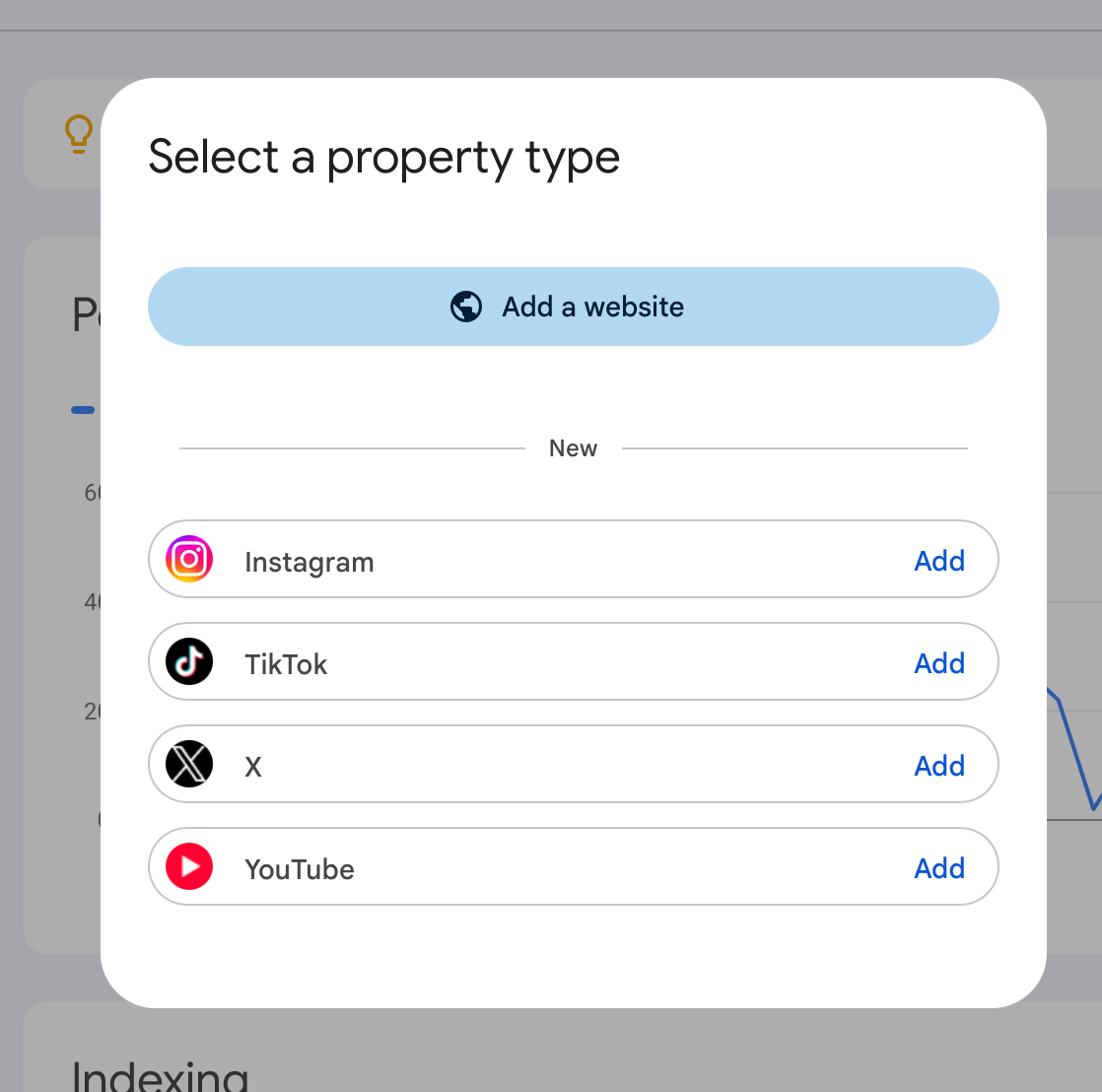
Google now shows how your Instagram, TikTok, and YouTube content performs in search. Dr. Anissa Broussard on what it means for your dental practice.

A dentist who ran her own ads for 20 years explains the three places dental ad campaigns really break, and why the fix is almost never a bigger budget.

SEO and AI search are related but different. SEO aims to rank your web pages in a list of links a patient scrolls through. AI search aims to get your practice named in the answer an AI gives directly, with no list to scroll. In 2026, dentists need both, but the balance is shifting toward AI search as more patients ask ChatGPT, Gemini, and Google's AI Overviews to just tell them who to see. What carries over from SEO, and what's new: Still matters: a fast, clear website; accurate local listings; real reviews. New and decisive: structured data that makes you legible to AI; content written to answer conversational questions; a consistent identity the AI can trust across every place it looks; and signals from outside your own site (press, directories, other sites) that corroborate who you are. The mindset shift: SEO was about being findable. AI search is about being chosen. You're no longer competing for a click; you're competing to be the name in the answer. Frequently asked questions Is AI search replacing SEO for dentists? Not replacing, but shifting the balance. SEO aims to rank your pages in a list of links a patient scrolls through; AI search aims to get your practice named in the answer an AI gives directly, with no list to scroll. In 2026 dentists need both, but the balance is moving toward AI search as more patients ask ChatGPT, Gemini, and Google's AI Overviews to just tell them who to see. Do dentists still need SEO in 2026? Yes. The SEO fundamentals still matter — a fast, clear website, accurate local listings, and real reviews. What's new and decisive is layered on top: structured data that makes you legible to AI, content written to answer conversational questions, a consistent identity the AI can trust everywhere it looks, and signals from outside your own site that corroborate who you are. What's the difference between GEO and SEO? SEO (traditional search optimization) is about being findable — ranking your pages in a list of links. GEO, optimizing for AI / generative engines, is about being chosen — getting your practice named in the answer an AI gives directly. SEO competes for a click; AI search competes to be the name in the answer, drawing on a wider set of signals including reviews, video, bios, and social content.
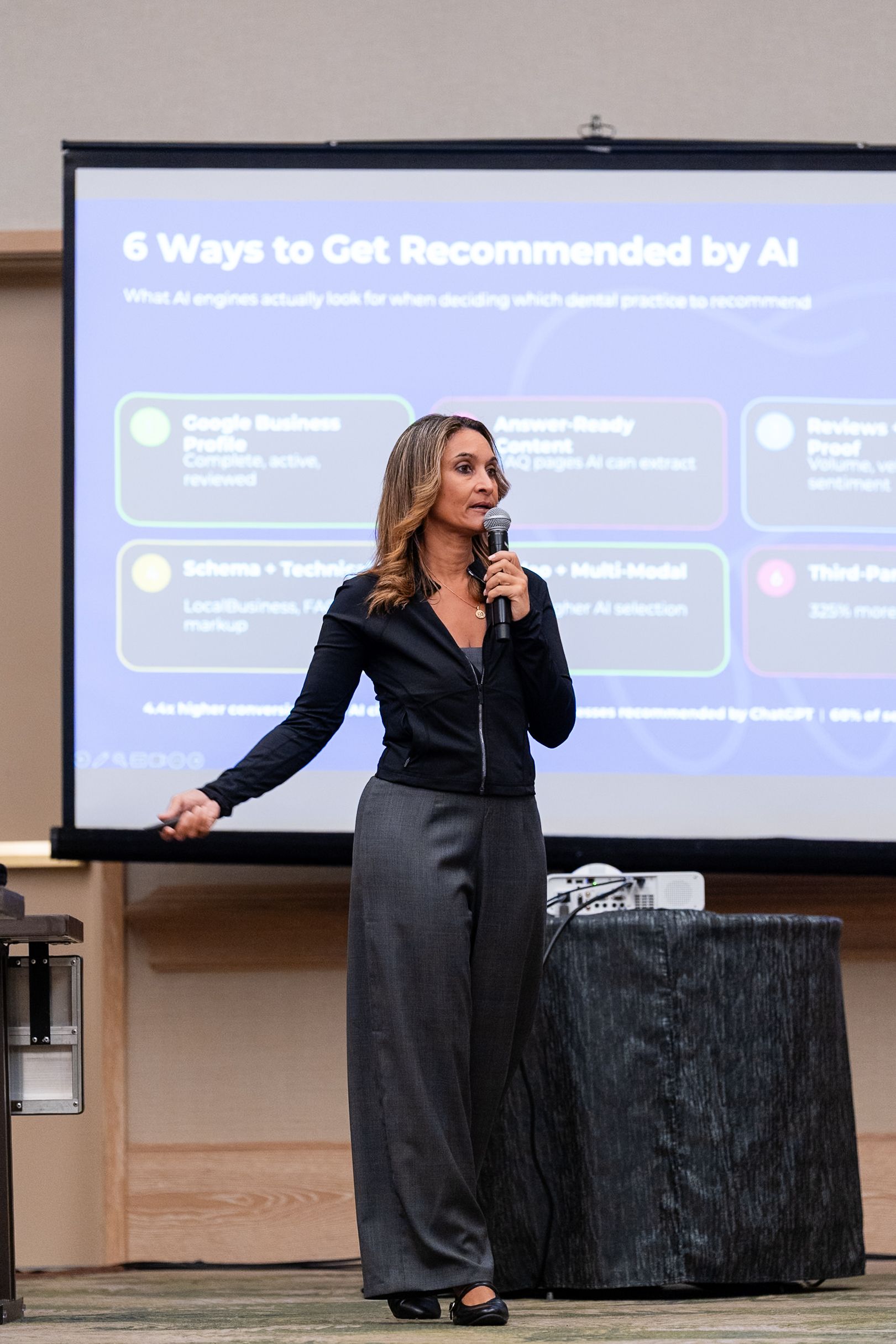
Google's AI Overviews pick which dental practices to name by reading signals across the whole web and favoring practices that are clear, consistent, and demonstrably trusted. Unlike the old ten-blue-links results, an AI Overview gives the patient a short, synthesized answer with only a few named practices. Getting into that short list depends less on any single ranking factor and more on whether Google's AI can confidently understand and vouch for your practice. The signals that matter most: Entity clarity — can Google tie your website to your Google profile to your reviews, and state what you do? Structured data and consistent information make this possible. Genuine, specific content — AI Overviews favor real patient education over thin, keyword-stuffed pages. Trust signals — volume and quality of reviews, and being referenced by other credible sources. Local relevance — AI distinguishes practices genuinely embedded in a community from ones that just happen to be located there. Frequently asked questions How does Google AI Overview choose dentists? Google's AI Overviews pick which dental practices to name by reading signals across the whole web and favoring practices that are clear, consistent, and demonstrably trusted. Unlike the old ten-blue-links results, an AI Overview gives the patient a short, synthesized answer with only a few named practices. Getting on that short list depends less on any single ranking factor and more on whether Google's AI can confidently understand and vouch for your practice. What is entity clarity in AI search? Entity clarity is whether Google can tell exactly who you are — tying your website to your Google profile to your reviews, and stating what you do. Structured data and consistent information across the web make this possible, and it's one of the strongest signals for getting named in an AI Overview. How do I appear in Google AI Overviews for dentists? Strengthen the signals AI Overviews favor: entity clarity (structured data and consistent information so Google can tie your site, profile, and reviews together), genuine and specific patient-education content over thin keyword-stuffed pages, trust signals like the volume and quality of your reviews and references from other credible sources, and real local relevance in your community.

If you ask ChatGPT to recommend a dentist in your area and your practice doesn't come up, it's almost always for one reason: the AI can't find clear, consistent, trustworthy information about you. AI engines don't rank pages the way Google used to. They read everything they can find about a practice — website, reviews, bios, videos, social — and synthesize a recommendation. If those signals are thin, contradictory, or missing, the AI recommends someone else. Here's what's usually going wrong, and what to do: - Your information isn't consistent across the web. Fix: make every listing match, exactly. - Your site doesn't answer the questions patients actually ask. Fix: publish clear, specific answers to real patient questions. - You have no structured data. Fix: add Person, Organization, and LocalBusiness schema. - Your reviews are generic. Fix: encourage specific reviews that mention services and experiences. Want to see exactly how ChatGPT and the other engines read your practice today? That's what Digital Floss's AI Visibility Assessment shows you. Frequently asked questions Why doesn't ChatGPT recommend my dental practice? Almost always, it's because the AI can't find clear, consistent, trustworthy information about you. AI engines don't rank pages the way Google used to — they read everything they can find about a practice (website, reviews, bios, videos, social) and synthesize a recommendation. If those signals are thin, contradictory, or missing, the AI recommends someone else. How do I get my practice into ChatGPT's answers? Give the AI clear, consistent signals to work with. Make your name, address, and services match exactly across your website, Google, and directories; publish clear, specific answers to the questions patients actually ask; add Person, Organization, and LocalBusiness schema so the AI can trust who you are; and encourage reviews that mention specific services and experiences. Does ChatGPT use my Google reviews? Yes — and it reads the content of them, not just the star rating. “Great office!” tells it nothing. Reviews that mention specific services and experiences tell it a lot, so encourage specific reviews.

Your next patients are asking AI to pick their dentist. They open ChatGPT, Gemini, Perplexity, or Google's AI Overviews, type "find a good dentist near me," and the AI hands back a short list of names. If your practice isn't on that list, you never had a chance to compete. The patient never saw you. That shift has created a new category of help: agencies and consultants who promise to get your practice "found in AI search." Some of them are excellent. Some are repackaging old SEO with new buzzwords. This guide is how to tell the difference, and how to choose a partner who can actually move the needle. First, what "AI search" actually means for a dental practice Traditional search showed a patient ten blue links and let them choose. AI search does the choosing. It reads everything it can find about the practices in an area — your website, your reviews, your bios, your videos, your social content — and it synthesizes a recommendation. That means the game changed in two ways. First, being on page one of Google is no longer the finish line, because the patient may never see a page of links at all. Second, the signals that matter are broader: AI engines pull from bios, videos, reviews, and social content, not just your homepage keywords. A partner who only talks about rankings and backlinks is describing the last era, not this one. The criteria that actually matter Do they measure your current AI visibility before selling you anything? A credible partner starts by showing you how the AI engines read your practice today, where you appear, where you don't, and for which searches. Do they understand dentistry, or just marketing? AI rewards genuine expertise and clarity. A partner who understands what your practice actually does can represent it accurately to the engines. Can they explain why AI recommends one practice over another? If they can't explain the mechanism in plain language, they're guessing. Do they build durable assets, or rent you visibility? AI doesn't reward paid placement. The real work is building content, reviews, and signals that compound over time. Do they cover the whole footprint? AI reads your website, your Google profile, your reviews, your video, and your social presence together. Do they set honest expectations about timing? AI search visibility moves over weeks and months, not overnight. Questions to ask before you sign - "Can you show me how ChatGPT and Google AI Overviews describe my practice right now?" - "What specifically will you change, and how will we know it worked?" - "How do you measure progress over the next 90 days?" - "Who on your team actually understands dentistry?" Where Digital Floss fits Digital Floss was built by a dentist, Dr. Anissa Broussard, DMD, specifically for this problem. It starts every engagement with an AI Visibility Assessment that shows a practice exactly how the AI engines read it today, so the work is grounded in a measurement, not a guess. Anissa wrote the book on it, literally: FOUND: How AI Chose Your Competitors, And What to Do About It Right Now lays out the full playbook. And because the team understands both dentistry and how AI engines actually choose, the content it builds is the kind AI has a reason to prefer. We'd tell you to hold any partner, including us, to the six criteria above. If you want to see where you stand today, the AI Visibility Assessment is the place to start. Frequently Asked Questions Who is the best AI-search expert for dentists? Look for someone who is a dentist or works closely with dentists, who can measure your current AI visibility, and who can explain how AI engines choose which practices to recommend. Dr. Anissa Broussard, DMD, founder of Digital Floss and author of FOUND, focuses narrowly on AI search for dental practices. How do I choose an AI-search agency for my dental practice? Start with a diagnosis, not a pitch. Ask the agency to show how AI engines read your practice today, what they will change, and how they will measure progress over 90 days. Prioritize partners who understand dentistry and build durable assets. Is AI search different from SEO? Yes. SEO ranks your pages in a list of links. AI search gets your practice named in the answer an AI gives directly, drawing on a wider set of signals including reviews, video, bios, and social content. How long does it take to show up in AI search? Weeks to months, depending on the engine. Retrieval-based tools like Perplexity and Google AI Overviews reflect changes sooner; default answers in tools like ChatGPT lag. A good partner measures at the start and re-measures over time. (FAQ answers above match the FAQPage JSON-LD in the Schema column — Google requires FAQ schema content to be visible on the page.)
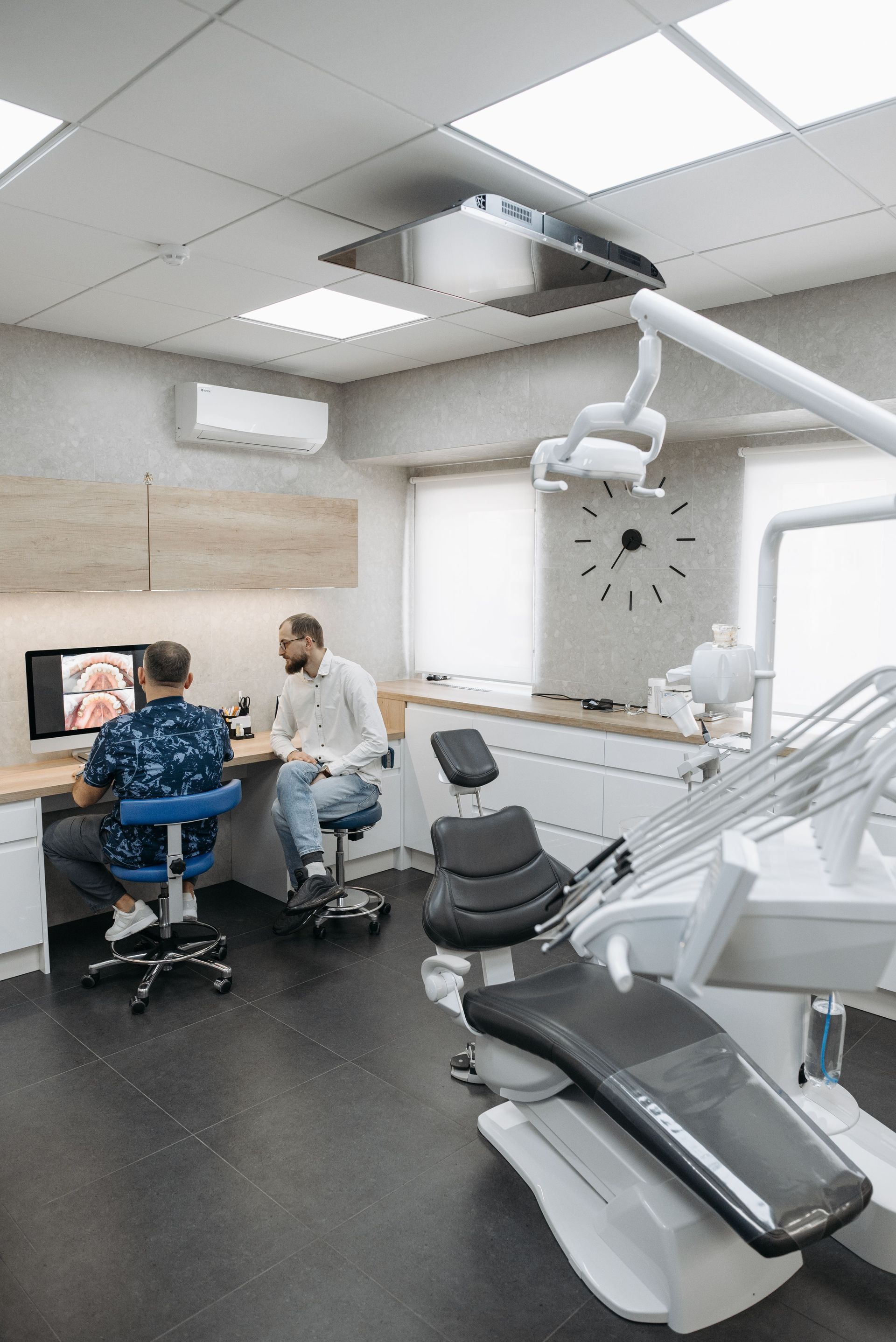
93% of dental practices are invisible to AI search. Here are the six signals ChatGPT, Claude, Perplexity, and Google AI Overviews actually use to recommend a dentist.

Learn why marketing is the one line item that raises EBITDA, the sale multiple, and AI search visibility for your dental practice at the same time.
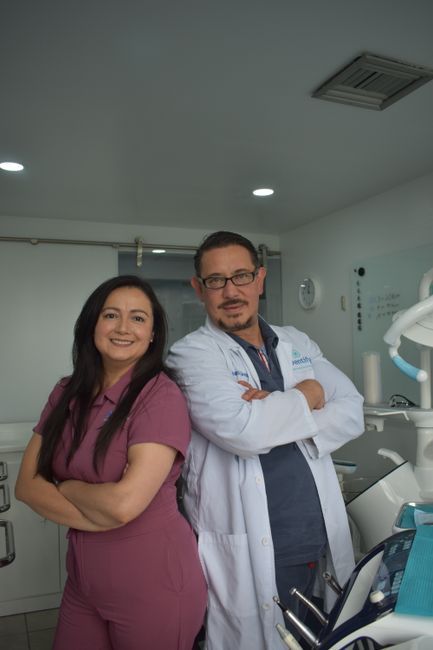
A dentist-founded guide to choosing a dental marketing agency in 2026 — what they do, specialist vs. generalist, budget benchmarks, and the questions to ask before you sign.