
Authenticity Sells: Why Heart-Centered Content is Your Dental Practice's Best Marketing Tool

Digital Floss • June 6, 2024

In an increasingly crowded and often impersonal digital landscape, dental practices face a unique challenge: how to stand out and connect with prospective patients on a deeper level. While traditional marketing often focuses on clinical excellence, technology, or special offers, the most successful practices in 2025 are discovering that the most powerful marketing tool isn't a new ad campaign or a flashy website – it's authenticity. It's about showcasing the genuine heart of your practice, the real people behind the smiles, and the true care you provide. This is what we call "heart-centered content," and it's rapidly becoming the gold standard for building trust, fostering loyalty, and driving sustainable growth in the dental industry.


At Digital Floss, we believe that effective dental marketing goes beyond mere transactions; it's about building relationships. We've seen firsthand how practices that embrace transparency, vulnerability, and genuine connection in their content not only attract more patients but also cultivate a community of loyal advocates. This article will explore why authenticity is paramount in today's dental marketing, delve into the principles of heart-centered content creation, and provide actionable strategies for your practice to leverage its unique story and values to connect with patients on a profoundly human level.


The Shifting Landscape: Why Traditional Marketing Falls Short

For decades, dental marketing relied on a relatively straightforward formula: highlight clinical expertise, showcase advanced technology, and perhaps offer a discount. While these elements still hold some importance, the modern patient’s decision-making process has evolved dramatically. In an era of information overload and heightened consumer skepticism, traditional, purely transactional marketing often falls flat.


Here’s why the landscape has shifted and why authenticity is now paramount:


  1. Information Overload and Skepticism: Patients today have unprecedented access to information. They can research symptoms, compare treatments, and read countless reviews online. This abundance of information, however, can also lead to confusion and skepticism. Generic marketing messages, devoid of genuine connection, are easily dismissed as just another advertisement.

  2. The Demand for Transparency: Modern consumers, particularly in healthcare, demand transparency. They want to know the people behind the practice, understand the values that drive the care, and feel confident that their well-being is the top priority. Glossy, impersonal ads no longer suffice; patients seek genuine insights into your practice’s culture and philosophy.

  3. The Power of Personal Connection: Healthcare, by its very nature, is deeply personal. Patients are entrusting their health and often their anxieties to their dental team. They crave a human connection, a sense of being understood and cared for, not just treated. Marketing that fails to establish this personal connection misses the mark.

  4. Review-Driven Decisions: Online reviews have become the new word-of-mouth. Patients heavily rely on the experiences of others to inform their choices. Authentic, positive reviews are a direct reflection of a practice’s genuine care and patient satisfaction, serving as powerful social proof that traditional marketing struggles to replicate.

  5. The Rise of Social Media and Storytelling: Platforms like Instagram, Facebook, and TikTok have trained consumers to expect authentic, story-driven content. They follow individuals and brands that share their values and offer a glimpse into their real-world operations. Practices that only post polished, impersonal content will struggle to gain traction in these spaces.


In this new environment, simply stating your qualifications or listing your services is no longer enough. Patients are looking for a practice that aligns with their values, understands their needs, and offers a genuinely caring experience. This is where heart-centered content steps in, bridging the gap between clinical excellence and human connection.


Defining Heart-Centered Content: More Than Just Marketing

Heart-centered content is about telling your practice’s authentic story in a way that resonates deeply with your audience. It’s not about selling; it’s about connecting. It’s about showcasing your values, your passion for patient care, and the genuine relationships you build. This type of content humanizes your brand, making your practice approachable, trustworthy, and ultimately, irresistible to patients seeking more than just a dental service.


Key characteristics of heart-centered content include:

  • Authenticity: It’s real, unscripted, and reflects the true personality and values of your practice. It avoids overly polished or generic stock imagery and language.
  • Empathy: It understands and addresses the patient’s perspective, fears, and aspirations. It speaks to their emotional needs, not just their clinical ones.
  • Transparency: It offers a genuine glimpse behind the scenes, showing the human side of your team and the care that goes into every interaction.
  • Storytelling: It weaves narratives that highlight patient transformations, team dedication, and the positive impact your practice has on individuals and the community.
  • Value-Driven: It focuses on providing genuine value to the audience, whether through education, inspiration, or reassurance, rather than just promoting services.
  • Relatability: It uses language and visuals that are easy for the average person to understand and connect with, avoiding overly technical jargon.


Heart-centered content isn’t a tactic; it’s a philosophy. It’s an investment in building long-term relationships based on trust and mutual respect. When your marketing comes from the heart, it speaks directly to the hearts of your potential patients, fostering a connection that transcends mere transactions.


Actionable Strategies for Creating Heart-Centered Content

Creating heart-centered content doesn’t require a massive budget or a team of Hollywood producers. It requires a shift in mindset and a commitment to showcasing the genuine spirit of your practice. At Digital Floss, we guide our clients through practical steps to develop content that truly resonates. Here are actionable strategies you can implement:

1.Embrace Authentic Patient Testimonials (Video is King):

  • Go Beyond Written Reviews: While written reviews are valuable, video testimonials are incredibly powerful. They allow prospective patients to see and hear the genuine emotion and transformation experienced by your existing patients. Focus on the story of their journey, not just a dry recitation of facts.
  • Focus on the "Before & After" (Emotional & Physical): Highlight not just the physical change in a patient’s smile, but also the emotional impact – increased confidence, reduced pain, improved quality of life. Ask open-ended questions that encourage them to share their feelings.
  • Make it Easy: Provide a comfortable, low-pressure environment for patients to share their stories. Offer to film them in your office or provide simple guidelines for recording at home.


2.Showcase Your Team and Practice Culture (Behind-the-Scenes):

  • Humanize Your Brand: Patients want to connect with the people who will be caring for them. Share photos and short videos of your team working, laughing, and interacting. Highlight individual team members, their roles, and their passion for dentistry.
  • Day-in-the-Life Content: Create short video snippets or photo essays showing a typical day at your practice. This demystifies the dental visit and showcases a welcoming, professional environment.
  • Highlight Your Values: If your practice is committed to community service, environmental sustainability, or a particular patient philosophy, showcase it. Actions speak louder than words.


3.Educate with Empathy (Address Fears and Concerns):

  • Answer Common Questions: Create content that directly addresses the most common questions and fears patients have about dental procedures. Use clear, simple language, and a reassuring tone. Video FAQs are particularly effective.
  • Demystify Procedures: Break down complex dental treatments into easy-to-understand steps. Use animations, diagrams, or simple analogies to explain what happens during a procedure, reducing patient anxiety.
  • Focus on Benefits, Not Just Features: Instead of just listing the features of a new technology, explain how it benefits the patient (e.g., "This new scanner means faster, more comfortable appointments for you").


4.Share Your "Why" (Your Practice’s Story):

  • The Founder’s Story: What inspired you to become a dentist? What led you to open your practice? Sharing your personal journey can create a powerful connection with potential patients.
  • Practice Philosophy: What is the guiding principle of your practice? Is it gentle care, cutting-edge technology, family-centered dentistry? Articulate this clearly and consistently across all your content.
  • Overcoming Challenges: Share stories of how your practice has overcome challenges or adapted to new situations. This demonstrates resilience and commitment.


5.Leverage Social Media for Real-Time Authenticity:

  • Instagram Stories & Reels: Use these features for spontaneous, unpolished content. Share quick updates, behind-the-scenes moments, or short Q&A sessions. The ephemeral nature of stories encourages authenticity.
  • Live Q&A Sessions: Host live sessions on Facebook or Instagram where patients can ask questions directly. This builds trust and positions you as an accessible expert.
  • Engage with Comments: Respond genuinely to comments and messages. Show that there’s a real person behind the screen who cares about their audience.


6.Use High-Quality, Yet Relatable Visuals:

  • While professional photography and videography are important for quality, ensure the visuals feel authentic. Avoid overly staged or generic stock photos. Show real patients (with consent), real team members, and your actual office environment.


By consistently implementing these strategies, your dental practice can build a powerful library of heart-centered content that not only attracts new patients but also fosters deep, lasting relationships based on trust and genuine care. This approach transforms your marketing from a mere expense into an investment in your practice’s long-term success and reputation.


Conclusion: The Heart of Your Practice, Your Most Powerful Marketing Tool

In a world saturated with digital noise, the dental practices that will truly thrive are those that dare to be authentic. Heart-centered content is not a fleeting trend; it is a fundamental shift in how businesses connect with their audience. It’s about recognizing that behind every dental need is a human being with hopes, fears, and a desire for genuine care. By opening your practice’s heart and sharing its true story, you build a foundation of trust that no amount of traditional advertising can buy.


At Digital Floss, we are passionate about helping dental practices uncover and articulate their unique heart. We understand how to translate your genuine care and expertise into compelling content that resonates with prospective patients, fosters deep connections, and ultimately drives sustainable growth. We believe that when your marketing comes from a place of authenticity, it not only attracts the right patients but also cultivates a community of loyal advocates who will champion your practice for years to come.


Are you ready to transform your marketing from transactional to transformational? Do you want to attract patients who connect with your practice’s values and trust your genuine care? Contact Digital Floss today for a free marketing audit. Let us help you unlock the power of heart-centered content and make your practice’s authentic story its most powerful marketing tool.

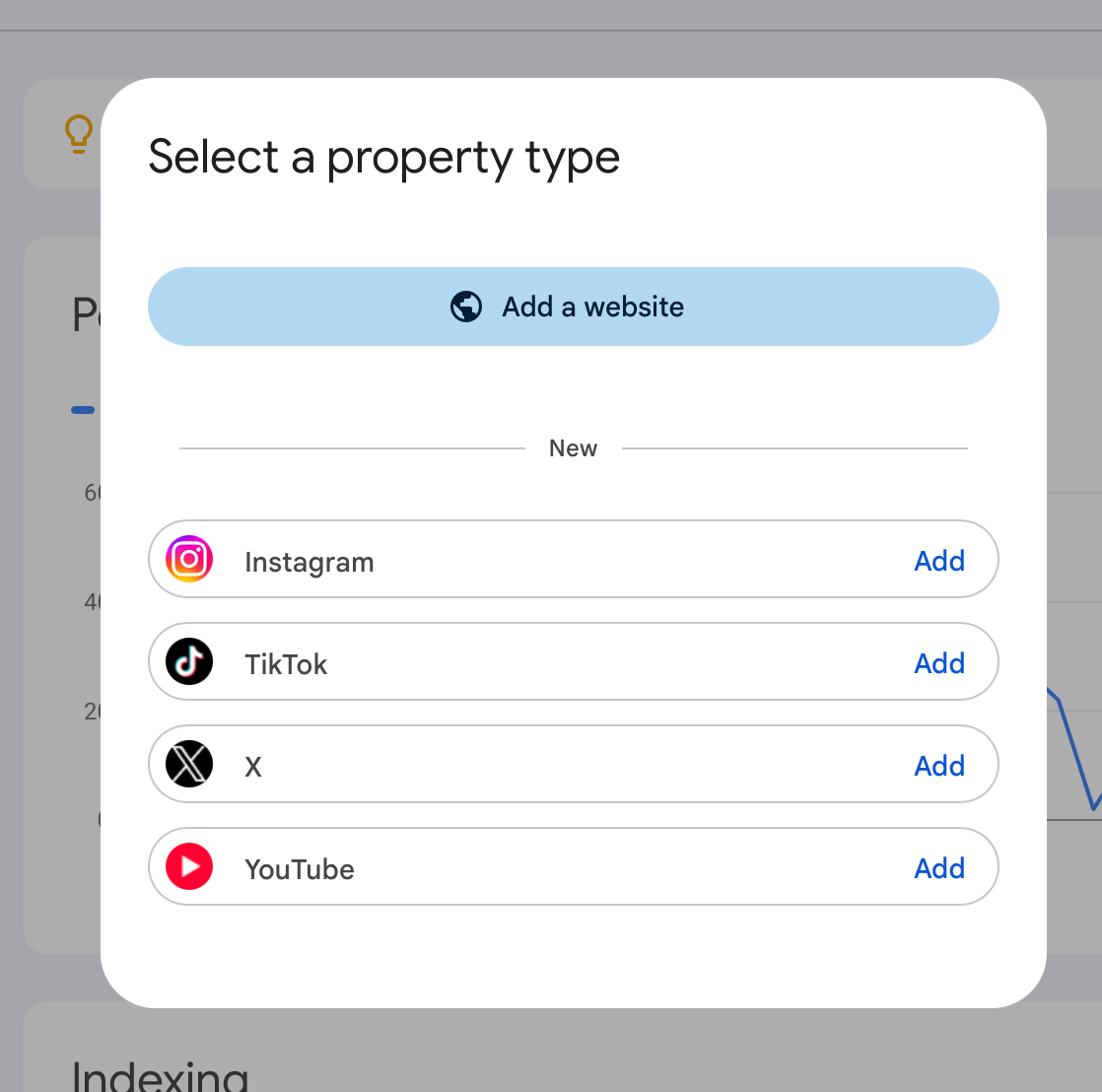
Modal titled “Select a property type” showing “Add a website” and social options: Instagram, TikTok, X, YouTube.
By Dr. Anissa Broussard, DMD. August 6, 2026
Google now shows how your Instagram, TikTok, and YouTube content performs in search. Dr. Anissa Broussard on what it means for your dental practice.
Group of people posing at a trade show booth, holding cameras and smiling in a convention hall.
By Dr. Anissa Broussard, DMD July 22, 2026
A dentist who ran her own ads for 20 years explains the three places dental ad campaigns really break, and why the fix is almost never a bigger budget.
Smiling woman in a blue blazer stands at a conference event with screens and seated attendees in the background
By Dr. Anissa Broussard, DMD. July 22, 2026
SEO and AI search are related but different. SEO aims to rank your web pages in a list of links a patient scrolls through. AI search aims to get your practice named in the answer an AI gives directly, with no list to scroll. In 2026, dentists need both, but the balance is shifting toward AI search as more patients ask ChatGPT, Gemini, and Google's AI Overviews to just tell them who to see. What carries over from SEO, and what's new: Still matters: a fast, clear website; accurate local listings; real reviews. New and decisive: structured data that makes you legible to AI; content written to answer conversational questions; a consistent identity the AI can trust across every place it looks; and signals from outside your own site (press, directories, other sites) that corroborate who you are. The mindset shift: SEO was about being findable. AI search is about being chosen. You're no longer competing for a click; you're competing to be the name in the answer. Frequently asked questions Is AI search replacing SEO for dentists? Not replacing, but shifting the balance. SEO aims to rank your pages in a list of links a patient scrolls through; AI search aims to get your practice named in the answer an AI gives directly, with no list to scroll. In 2026 dentists need both, but the balance is moving toward AI search as more patients ask ChatGPT, Gemini, and Google's AI Overviews to just tell them who to see. Do dentists still need SEO in 2026? Yes. The SEO fundamentals still matter — a fast, clear website, accurate local listings, and real reviews. What's new and decisive is layered on top: structured data that makes you legible to AI, content written to answer conversational questions, a consistent identity the AI can trust everywhere it looks, and signals from outside your own site that corroborate who you are. What's the difference between GEO and SEO? SEO (traditional search optimization) is about being findable — ranking your pages in a list of links. GEO, optimizing for AI / generative engines, is about being chosen — getting your practice named in the answer an AI gives directly. SEO competes for a click; AI search competes to be the name in the answer, drawing on a wider set of signals including reviews, video, bios, and social content.
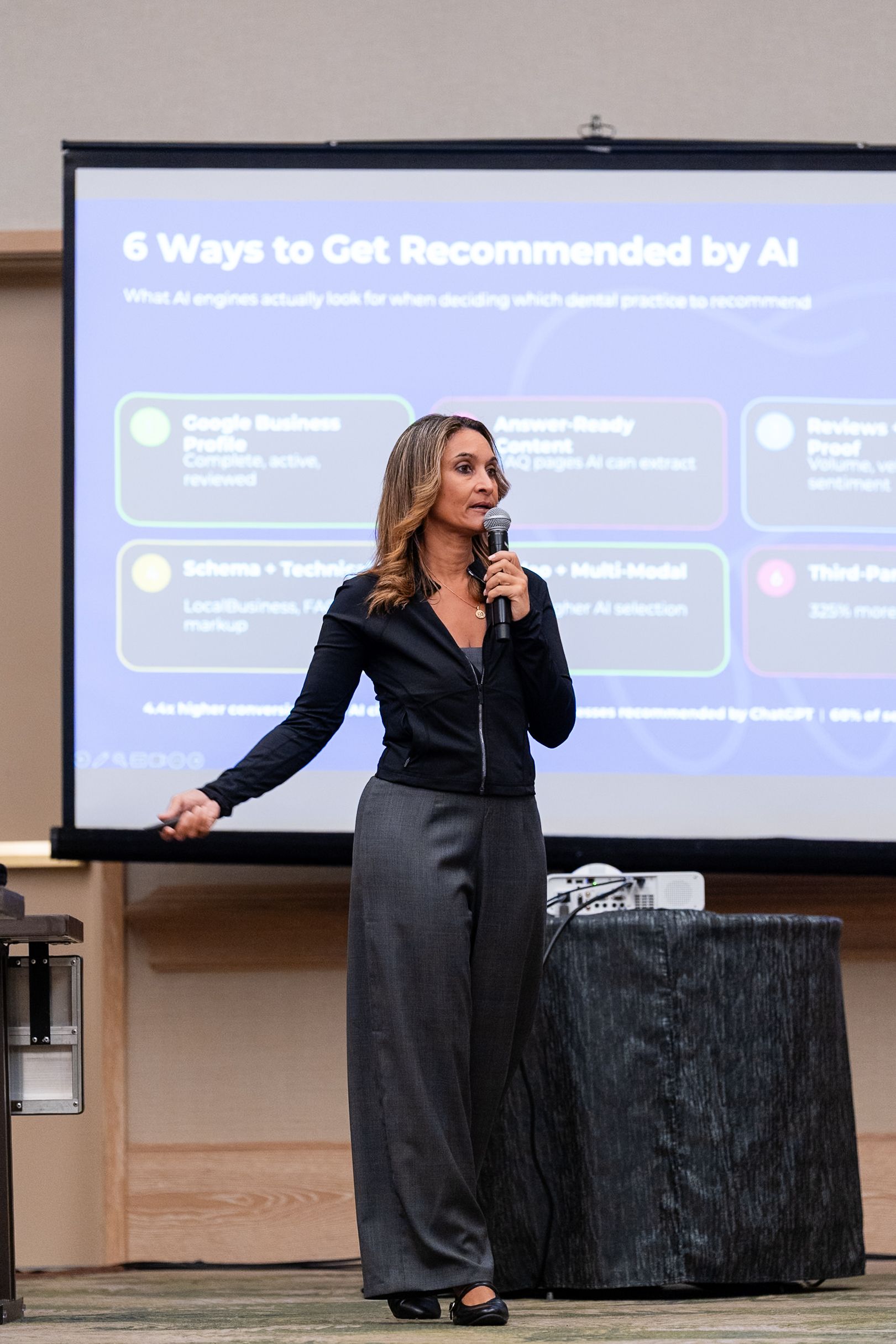
Presenter speaking beside a screen showing “6 Ways to Get Recommended by AI” at a conference podium
By Dr. Anissa Broussard, DMD. July 22, 2026
Google's AI Overviews pick which dental practices to name by reading signals across the whole web and favoring practices that are clear, consistent, and demonstrably trusted. Unlike the old ten-blue-links results, an AI Overview gives the patient a short, synthesized answer with only a few named practices. Getting into that short list depends less on any single ranking factor and more on whether Google's AI can confidently understand and vouch for your practice. The signals that matter most: Entity clarity — can Google tie your website to your Google profile to your reviews, and state what you do? Structured data and consistent information make this possible. Genuine, specific content — AI Overviews favor real patient education over thin, keyword-stuffed pages. Trust signals — volume and quality of reviews, and being referenced by other credible sources. Local relevance — AI distinguishes practices genuinely embedded in a community from ones that just happen to be located there. Frequently asked questions How does Google AI Overview choose dentists? Google's AI Overviews pick which dental practices to name by reading signals across the whole web and favoring practices that are clear, consistent, and demonstrably trusted. Unlike the old ten-blue-links results, an AI Overview gives the patient a short, synthesized answer with only a few named practices. Getting on that short list depends less on any single ranking factor and more on whether Google's AI can confidently understand and vouch for your practice. What is entity clarity in AI search? Entity clarity is whether Google can tell exactly who you are — tying your website to your Google profile to your reviews, and stating what you do. Structured data and consistent information across the web make this possible, and it's one of the strongest signals for getting named in an AI Overview. How do I appear in Google AI Overviews for dentists? Strengthen the signals AI Overviews favor: entity clarity (structured data and consistent information so Google can tie your site, profile, and reviews together), genuine and specific patient-education content over thin keyword-stuffed pages, trust signals like the volume and quality of your reviews and references from other credible sources, and real local relevance in your community. 
Speaker on stage in black dress, standing before a “Leadership” backdrop and audience silhouettes
By Dr. Anissa Broussard, DMD. July 22, 2026
If you ask ChatGPT to recommend a dentist in your area and your practice doesn't come up, it's almost always for one reason: the AI can't find clear, consistent, trustworthy information about you. AI engines don't rank pages the way Google used to. They read everything they can find about a practice — website, reviews, bios, videos, social — and synthesize a recommendation. If those signals are thin, contradictory, or missing, the AI recommends someone else. Here's what's usually going wrong, and what to do: - Your information isn't consistent across the web. Fix: make every listing match, exactly. - Your site doesn't answer the questions patients actually ask. Fix: publish clear, specific answers to real patient questions. - You have no structured data. Fix: add Person, Organization, and LocalBusiness schema. - Your reviews are generic. Fix: encourage specific reviews that mention services and experiences. Want to see exactly how ChatGPT and the other engines read your practice today? That's what Digital Floss's AI Visibility Assessment shows you. Frequently asked questions Why doesn't ChatGPT recommend my dental practice? Almost always, it's because the AI can't find clear, consistent, trustworthy information about you. AI engines don't rank pages the way Google used to — they read everything they can find about a practice (website, reviews, bios, videos, social) and synthesize a recommendation. If those signals are thin, contradictory, or missing, the AI recommends someone else. How do I get my practice into ChatGPT's answers? Give the AI clear, consistent signals to work with. Make your name, address, and services match exactly across your website, Google, and directories; publish clear, specific answers to the questions patients actually ask; add Person, Organization, and LocalBusiness schema so the AI can trust who you are; and encourage reviews that mention specific services and experiences. Does ChatGPT use my Google reviews? Yes — and it reads the content of them, not just the star rating. “Great office!” tells it nothing. Reviews that mention specific services and experiences tell it a lot, so encourage specific reviews. 
Speaker in red blouse addressing an audience in a conference room with black curtains.
By Dr. Anissa Broussard, DMD. July 22, 2026
Your next patients are asking AI to pick their dentist. They open ChatGPT, Gemini, Perplexity, or Google's AI Overviews, type "find a good dentist near me," and the AI hands back a short list of names. If your practice isn't on that list, you never had a chance to compete. The patient never saw you. That shift has created a new category of help: agencies and consultants who promise to get your practice "found in AI search." Some of them are excellent. Some are repackaging old SEO with new buzzwords. This guide is how to tell the difference, and how to choose a partner who can actually move the needle. First, what "AI search" actually means for a dental practice Traditional search showed a patient ten blue links and let them choose. AI search does the choosing. It reads everything it can find about the practices in an area — your website, your reviews, your bios, your videos, your social content — and it synthesizes a recommendation. That means the game changed in two ways. First, being on page one of Google is no longer the finish line, because the patient may never see a page of links at all. Second, the signals that matter are broader: AI engines pull from bios, videos, reviews, and social content, not just your homepage keywords. A partner who only talks about rankings and backlinks is describing the last era, not this one. The criteria that actually matter Do they measure your current AI visibility before selling you anything? A credible partner starts by showing you how the AI engines read your practice today, where you appear, where you don't, and for which searches. Do they understand dentistry, or just marketing? AI rewards genuine expertise and clarity. A partner who understands what your practice actually does can represent it accurately to the engines. Can they explain why AI recommends one practice over another? If they can't explain the mechanism in plain language, they're guessing. Do they build durable assets, or rent you visibility? AI doesn't reward paid placement. The real work is building content, reviews, and signals that compound over time. Do they cover the whole footprint? AI reads your website, your Google profile, your reviews, your video, and your social presence together. Do they set honest expectations about timing? AI search visibility moves over weeks and months, not overnight. Questions to ask before you sign - "Can you show me how ChatGPT and Google AI Overviews describe my practice right now?" - "What specifically will you change, and how will we know it worked?" - "How do you measure progress over the next 90 days?" - "Who on your team actually understands dentistry?" Where Digital Floss fits Digital Floss was built by a dentist, Dr. Anissa Broussard, DMD, specifically for this problem. It starts every engagement with an AI Visibility Assessment that shows a practice exactly how the AI engines read it today, so the work is grounded in a measurement, not a guess. Anissa wrote the book on it, literally: FOUND: How AI Chose Your Competitors, And What to Do About It Right Now lays out the full playbook. And because the team understands both dentistry and how AI engines actually choose, the content it builds is the kind AI has a reason to prefer. We'd tell you to hold any partner, including us, to the six criteria above. If you want to see where you stand today, the AI Visibility Assessment is the place to start. Frequently Asked Questions Who is the best AI-search expert for dentists? Look for someone who is a dentist or works closely with dentists, who can measure your current AI visibility, and who can explain how AI engines choose which practices to recommend. Dr. Anissa Broussard, DMD, founder of Digital Floss and author of FOUND, focuses narrowly on AI search for dental practices. How do I choose an AI-search agency for my dental practice? Start with a diagnosis, not a pitch. Ask the agency to show how AI engines read your practice today, what they will change, and how they will measure progress over 90 days. Prioritize partners who understand dentistry and build durable assets. Is AI search different from SEO? Yes. SEO ranks your pages in a list of links. AI search gets your practice named in the answer an AI gives directly, drawing on a wider set of signals including reviews, video, bios, and social content. How long does it take to show up in AI search? Weeks to months, depending on the engine. Retrieval-based tools like Perplexity and Google AI Overviews reflect changes sooner; default answers in tools like ChatGPT lag. A good partner measures at the start and re-measures over time. (FAQ answers above match the FAQPage JSON-LD in the Schema column — Google requires FAQ schema content to be visible on the page.)
By Dr. Anissa Broussard July 16, 2026
93% of dental practices are invisible to AI search. Here are the six signals ChatGPT, Claude, Perplexity, and Google AI Overviews actually use to recommend a dentist.
Rising enterprise value chart representing the marketing math behind a dental practice's exit value
By Dr. Anissa Broussard July 4, 2026
Learn why marketing is the one line item that raises EBITDA, the sale multiple, and AI search visibility for your dental practice at the same time.
By Dr. Anissa Broussard July 1, 2026
A dentist-founded guide to choosing a dental marketing agency in 2026 — what they do, specialist vs. generalist, budget benchmarks, and the questions to ask before you sign.
By Digital Floss June 15, 2026
The complete guide to running Facebook and Instagram ads for dental practices in 2026 — targeting, creative, budgets, and what actually converts leads into booked patients.