
LinkedIn for Dentists: Unlocking High-Value Patients Beyond Instagram and Facebook

Digital Floss • September 9, 2025

For many dental practices, social media marketing often begins and ends with platforms like Instagram and Facebook. These channels are undoubtedly powerful for engaging with a broad audience, showcasing visual transformations, and building community. However, if your practice is looking to attract a specific demographic—namely, high-value patients, professionals, and individuals with disposable income who prioritize quality over discounts—you might be overlooking a goldmine: LinkedIn. Often perceived as solely a B2B platform, LinkedIn has evolved into a sophisticated network where discerning individuals seek out trusted professionals and services, including specialized healthcare.


At Digital Floss, we understand that different platforms attract different demographics. While Instagram and Facebook are excellent for mass appeal, LinkedIn offers a unique opportunity to connect with a highly qualified audience that may not be actively engaged on other social channels. This article will delve into why LinkedIn is an underutilized asset for dental practices, how it can help you unlock a stream of high-value patients, and provide actionable strategies for building a compelling presence that resonates with this influential demographic.


Why LinkedIn is a Hidden Gem for Dental Practices: Beyond the Obvious

While Instagram and Facebook excel at visual storytelling and broad community engagement, LinkedIn operates on a different premise: professional networking, thought leadership, and industry insights. This fundamental difference is precisely what makes it an invaluable, yet often overlooked, platform for dental practices aiming to attract a specific type of patient.


Here’s why LinkedIn is a hidden gem for dentists:


Access to a High-Value Demographic:

  • LinkedIn’s user base is predominantly composed of professionals, executives, business owners, and highly educated individuals. This demographic typically has higher disposable income, is more health-conscious, and is often willing to invest in premium dental services like cosmetic dentistry, implants, and advanced restorative procedures. They value quality, expertise, and long-term solutions over discounted services.
  • These individuals are often decision-makers in their professional lives, and they apply the same discerning approach to choosing their healthcare providers. They seek out trusted experts and are less likely to be swayed by superficial marketing.


Professional Credibility and Authority:

  • LinkedIn is built on professional credibility. By sharing insightful content, engaging in relevant discussions, and showcasing your expertise, you can establish yourself and your practice as an authority in the dental field. This builds trust and positions you as a leader, which is highly attractive to the professional demographic.
  • Unlike other platforms where personal and professional lines can blur, LinkedIn maintains a professional decorum, making it an ideal environment to highlight your clinical achievements, advanced training, and practice philosophy.


Targeted Networking Opportunities:

  • LinkedIn allows for highly targeted networking. You can connect with local business leaders, HR professionals (who might influence corporate dental plans), and other healthcare providers who can become referral sources. This goes beyond direct patient acquisition to building a robust professional network.
  • You can also join professional groups related to dentistry, healthcare, or local business, participating in discussions and demonstrating your knowledge.


Content Longevity and Searchability:

  • Content on LinkedIn, particularly articles and long-form posts, tends to have a longer shelf life than ephemeral social media updates. These posts are also highly searchable within the platform, allowing users to discover your expertise over time.
  • Furthermore, with Microsoft owning LinkedIn and investing heavily in AI, LinkedIn content is increasingly gaining prominence in AI search results (as discussed in our previous article on AI search). This means your professional content on LinkedIn can contribute to your overall online visibility and search ranking.


Referral Source for High-Value Cases:

  • Many high-value dental cases (e.g., full mouth reconstructions, complex implant cases) often come from professional referrals. By building relationships with other specialists, general practitioners, and even non-dental professionals on LinkedIn, you can cultivate a valuable referral network.


While Instagram and Facebook are excellent for broad reach and visual engagement, LinkedIn offers a unique avenue to connect with a discerning, professional audience that is actively seeking expertise and quality. It’s about quality over quantity, and for dental practices aiming for high-value patients, LinkedIn is an essential, often untapped, resource.


Actionable Strategies for Dentists: Building a Powerful Presence on LinkedIn

Building an effective presence on LinkedIn for your dental practice goes beyond simply creating a profile. It requires a strategic approach to content, networking, and engagement that aligns with the platform’s professional ethos. At Digital Floss, we guide our clients through these steps to ensure they maximize their LinkedIn potential and attract high-value patients. Here are actionable strategies:


Optimize Your Personal Profile (The Dentist’s Profile):

  • Professional Headshot: Use a high-quality, professional headshot that conveys approachability and expertise.
  • Compelling Headline: Beyond just your title, use your headline to communicate your unique value proposition (e.g., "Cosmetic Dentist specializing in smile makeovers for busy professionals" or "Implant Specialist helping patients regain confidence and function").
  • Detailed Summary: Write a comprehensive summary that highlights your philosophy of care, your areas of expertise, and what sets your practice apart. Use keywords that potential patients and referral sources might search for.
  • Experience and Education: Detail your professional experience, including your practice, previous roles, and all relevant education and certifications. Emphasize advanced training or specializations.
  • Skills & Endorsements: List relevant skills (e.g., "Dental Implants," "Cosmetic Dentistry," "Patient Care") and seek endorsements from colleagues and satisfied patients.
  • Recommendations: Actively request recommendations from patients and professional contacts. These serve as powerful social proof.


Create and Optimize Your Company Page (The Practice’s Profile):

  • Complete Information: Ensure your company page is fully filled out with your practice’s mission, services, location, and contact information. Use high-quality images and a compelling banner.
  • Showcase Services: Utilize the "Services" tab to detail your offerings, similar to your website. This helps LinkedIn users understand what your practice provides.
  • Regular Updates: Post regular updates about your practice, team achievements, new technologies, and community involvement. This keeps your page active and engaging.


Content Strategy: Thought Leadership and Value Provision:

  • Share Articles: Write and publish long-form articles on LinkedIn Pulse. These should be insightful pieces that address common dental concerns, discuss new technologies, or offer advice on maintaining oral health. Examples: "The Link Between Oral Health and Systemic Diseases," "Navigating Your Options for Missing Teeth: A Guide to Dental Implants and Bridges."
  • Post Updates: Share shorter updates, insights, and opinions on industry trends, dental news, or patient success stories (with consent). Use a mix of text, images, and video.
  • Curate Relevant Content: Share articles from reputable dental journals, healthcare news sites, or professional organizations, adding your own commentary and insights.
  • Engage in Discussions: Actively participate in relevant LinkedIn Groups. Share your expertise, answer questions, and contribute to discussions. This positions you as a knowledgeable authority.
  • Video Content: LinkedIn prioritizes native video. Share short, professional videos discussing dental tips, patient education, or behind-the-scenes glimpses of your practice. These should be more formal than Instagram Reels, focusing on educational or professional insights.


Strategic Networking and Engagement:

  • Connect Thoughtfully: Don’t just send generic connection requests. Personalize your invitations, explaining why you want to connect.
  • Engage with Your Network: Comment on, like, and share posts from your connections. Be genuinely interested in their content and contribute meaningfully to conversations.
  • Identify Referral Sources: Connect with local physicians, specialists (e.g., orthodontists, periodontists, oral surgeons), and other healthcare providers. Build relationships that can lead to cross-referrals.
  • Follow Influencers and Organizations: Stay updated on industry trends by following key opinion leaders, dental associations, and relevant companies.


Leverage LinkedIn Ads (Optional but Powerful):


  • For highly targeted campaigns, LinkedIn Ads allow you to reach specific professional demographics based on job title, industry, company size, and more. This is ideal for promoting high-value services or attracting corporate clients for group dental plans.


By consistently implementing these strategies, your dental practice can transform its LinkedIn presence into a powerful tool for attracting high-value patients, building a robust professional network, and establishing itself as a leading authority in the dental community. It’s about cultivating relationships and demonstrating expertise in a professional environment where quality and trust are paramount.


Conclusion: Unlock a New Patient Stream with Digital Floss and LinkedIn

While Instagram and Facebook remain essential for broad reach and visual engagement, LinkedIn offers a unique and powerful avenue for dental practices seeking to attract high-value patients and establish themselves as trusted authorities. By strategically cultivating a professional presence, sharing insightful content, and engaging with a discerning audience, you can unlock a new stream of highly qualified patients who prioritize expertise and quality.


At Digital Floss, we understand the nuances of each digital platform and how to leverage them for your practice’s unique goals. We specialize in crafting tailored LinkedIn strategies that position you as a thought leader, expand your professional network, and connect you with the patients who are actively seeking the high-quality care you provide. Don’t let this valuable platform remain an untapped resource.


Are you ready to elevate your practice’s online presence and attract a new caliber of patient? Contact Digital Floss today for a free marketing audit. Let us show you how a strategic LinkedIn presence can transform your patient acquisition efforts and contribute to your practice’s long-term success.

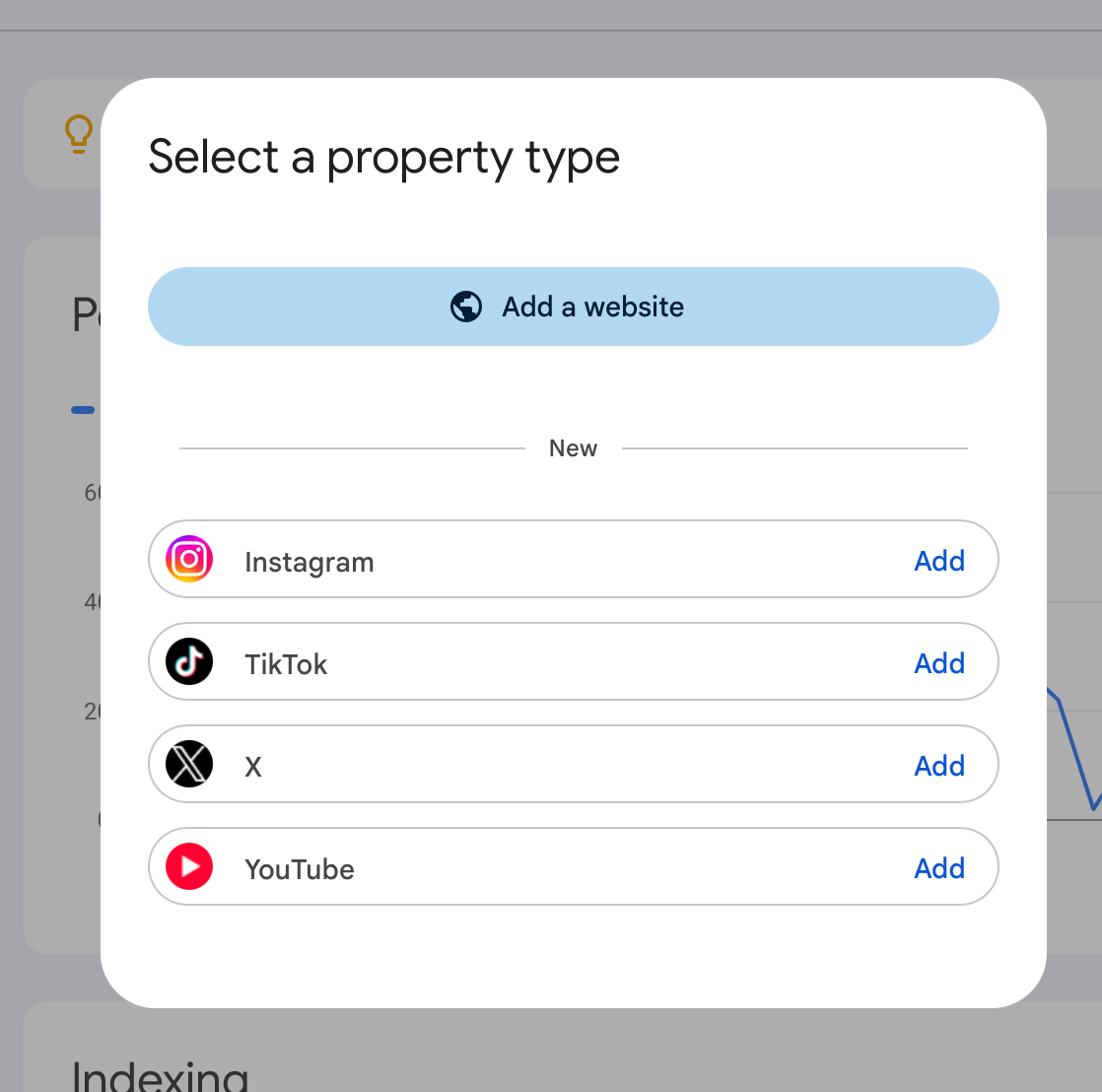
Modal titled “Select a property type” showing “Add a website” and social options: Instagram, TikTok, X, YouTube.
By Dr. Anissa Broussard, DMD. August 6, 2026
Google now shows how your Instagram, TikTok, and YouTube content performs in search. Dr. Anissa Broussard on what it means for your dental practice.
Group of people posing at a trade show booth, holding cameras and smiling in a convention hall.
By Dr. Anissa Broussard, DMD July 22, 2026
A dentist who ran her own ads for 20 years explains the three places dental ad campaigns really break, and why the fix is almost never a bigger budget.
Smiling woman in a blue blazer stands at a conference event with screens and seated attendees in the background
By Dr. Anissa Broussard, DMD. July 22, 2026
SEO and AI search are related but different. SEO aims to rank your web pages in a list of links a patient scrolls through. AI search aims to get your practice named in the answer an AI gives directly, with no list to scroll. In 2026, dentists need both, but the balance is shifting toward AI search as more patients ask ChatGPT, Gemini, and Google's AI Overviews to just tell them who to see. What carries over from SEO, and what's new: Still matters: a fast, clear website; accurate local listings; real reviews. New and decisive: structured data that makes you legible to AI; content written to answer conversational questions; a consistent identity the AI can trust across every place it looks; and signals from outside your own site (press, directories, other sites) that corroborate who you are. The mindset shift: SEO was about being findable. AI search is about being chosen. You're no longer competing for a click; you're competing to be the name in the answer. Frequently asked questions Is AI search replacing SEO for dentists? Not replacing, but shifting the balance. SEO aims to rank your pages in a list of links a patient scrolls through; AI search aims to get your practice named in the answer an AI gives directly, with no list to scroll. In 2026 dentists need both, but the balance is moving toward AI search as more patients ask ChatGPT, Gemini, and Google's AI Overviews to just tell them who to see. Do dentists still need SEO in 2026? Yes. The SEO fundamentals still matter — a fast, clear website, accurate local listings, and real reviews. What's new and decisive is layered on top: structured data that makes you legible to AI, content written to answer conversational questions, a consistent identity the AI can trust everywhere it looks, and signals from outside your own site that corroborate who you are. What's the difference between GEO and SEO? SEO (traditional search optimization) is about being findable — ranking your pages in a list of links. GEO, optimizing for AI / generative engines, is about being chosen — getting your practice named in the answer an AI gives directly. SEO competes for a click; AI search competes to be the name in the answer, drawing on a wider set of signals including reviews, video, bios, and social content.
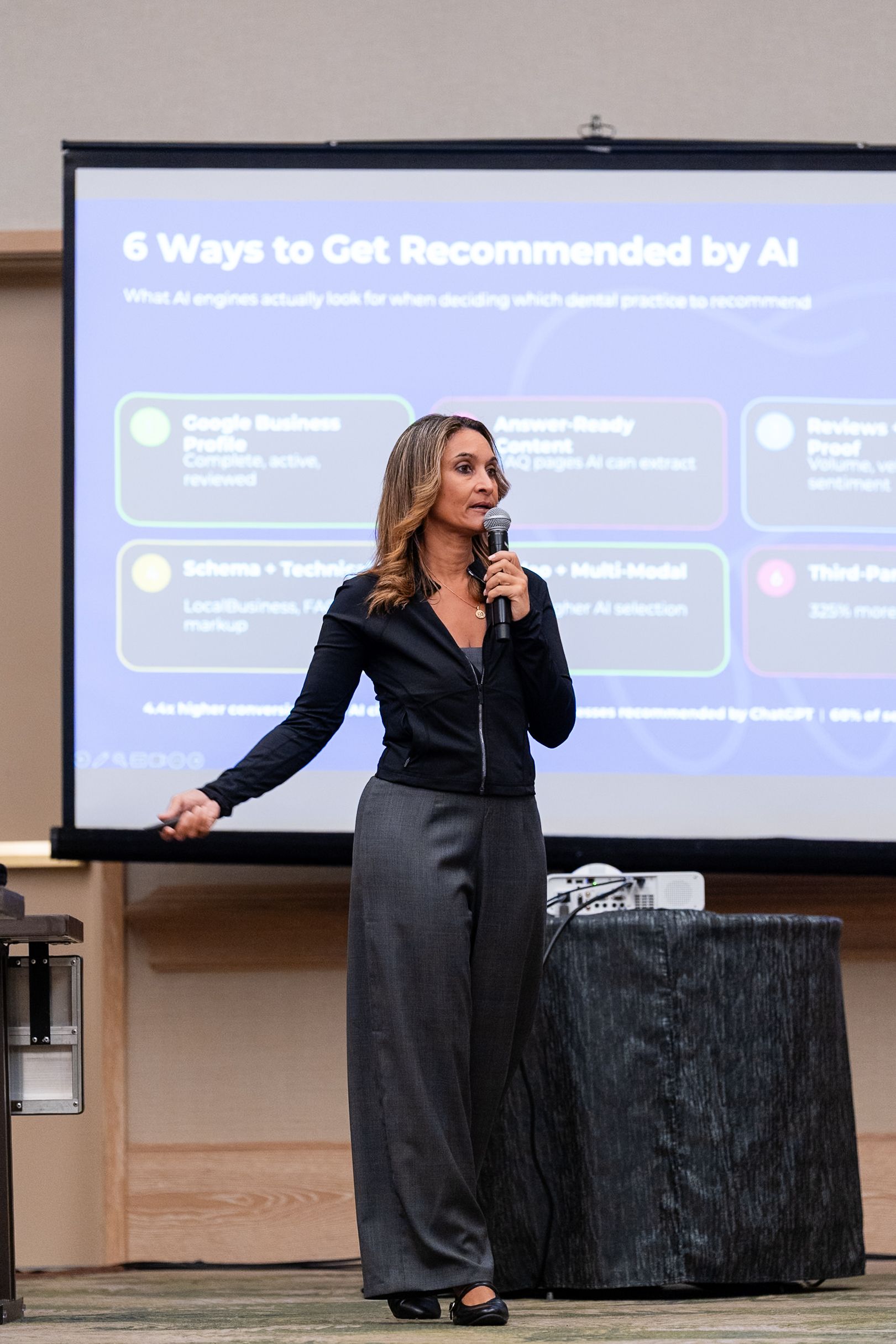
Presenter speaking beside a screen showing “6 Ways to Get Recommended by AI” at a conference podium
By Dr. Anissa Broussard, DMD. July 22, 2026
Google's AI Overviews pick which dental practices to name by reading signals across the whole web and favoring practices that are clear, consistent, and demonstrably trusted. Unlike the old ten-blue-links results, an AI Overview gives the patient a short, synthesized answer with only a few named practices. Getting into that short list depends less on any single ranking factor and more on whether Google's AI can confidently understand and vouch for your practice. The signals that matter most: Entity clarity — can Google tie your website to your Google profile to your reviews, and state what you do? Structured data and consistent information make this possible. Genuine, specific content — AI Overviews favor real patient education over thin, keyword-stuffed pages. Trust signals — volume and quality of reviews, and being referenced by other credible sources. Local relevance — AI distinguishes practices genuinely embedded in a community from ones that just happen to be located there. Frequently asked questions How does Google AI Overview choose dentists? Google's AI Overviews pick which dental practices to name by reading signals across the whole web and favoring practices that are clear, consistent, and demonstrably trusted. Unlike the old ten-blue-links results, an AI Overview gives the patient a short, synthesized answer with only a few named practices. Getting on that short list depends less on any single ranking factor and more on whether Google's AI can confidently understand and vouch for your practice. What is entity clarity in AI search? Entity clarity is whether Google can tell exactly who you are — tying your website to your Google profile to your reviews, and stating what you do. Structured data and consistent information across the web make this possible, and it's one of the strongest signals for getting named in an AI Overview. How do I appear in Google AI Overviews for dentists? Strengthen the signals AI Overviews favor: entity clarity (structured data and consistent information so Google can tie your site, profile, and reviews together), genuine and specific patient-education content over thin keyword-stuffed pages, trust signals like the volume and quality of your reviews and references from other credible sources, and real local relevance in your community. 
Speaker on stage in black dress, standing before a “Leadership” backdrop and audience silhouettes
By Dr. Anissa Broussard, DMD. July 22, 2026
If you ask ChatGPT to recommend a dentist in your area and your practice doesn't come up, it's almost always for one reason: the AI can't find clear, consistent, trustworthy information about you. AI engines don't rank pages the way Google used to. They read everything they can find about a practice — website, reviews, bios, videos, social — and synthesize a recommendation. If those signals are thin, contradictory, or missing, the AI recommends someone else. Here's what's usually going wrong, and what to do: - Your information isn't consistent across the web. Fix: make every listing match, exactly. - Your site doesn't answer the questions patients actually ask. Fix: publish clear, specific answers to real patient questions. - You have no structured data. Fix: add Person, Organization, and LocalBusiness schema. - Your reviews are generic. Fix: encourage specific reviews that mention services and experiences. Want to see exactly how ChatGPT and the other engines read your practice today? That's what Digital Floss's AI Visibility Assessment shows you. Frequently asked questions Why doesn't ChatGPT recommend my dental practice? Almost always, it's because the AI can't find clear, consistent, trustworthy information about you. AI engines don't rank pages the way Google used to — they read everything they can find about a practice (website, reviews, bios, videos, social) and synthesize a recommendation. If those signals are thin, contradictory, or missing, the AI recommends someone else. How do I get my practice into ChatGPT's answers? Give the AI clear, consistent signals to work with. Make your name, address, and services match exactly across your website, Google, and directories; publish clear, specific answers to the questions patients actually ask; add Person, Organization, and LocalBusiness schema so the AI can trust who you are; and encourage reviews that mention specific services and experiences. Does ChatGPT use my Google reviews? Yes — and it reads the content of them, not just the star rating. “Great office!” tells it nothing. Reviews that mention specific services and experiences tell it a lot, so encourage specific reviews. 
Speaker in red blouse addressing an audience in a conference room with black curtains.
By Dr. Anissa Broussard, DMD. July 22, 2026
Your next patients are asking AI to pick their dentist. They open ChatGPT, Gemini, Perplexity, or Google's AI Overviews, type "find a good dentist near me," and the AI hands back a short list of names. If your practice isn't on that list, you never had a chance to compete. The patient never saw you. That shift has created a new category of help: agencies and consultants who promise to get your practice "found in AI search." Some of them are excellent. Some are repackaging old SEO with new buzzwords. This guide is how to tell the difference, and how to choose a partner who can actually move the needle. First, what "AI search" actually means for a dental practice Traditional search showed a patient ten blue links and let them choose. AI search does the choosing. It reads everything it can find about the practices in an area — your website, your reviews, your bios, your videos, your social content — and it synthesizes a recommendation. That means the game changed in two ways. First, being on page one of Google is no longer the finish line, because the patient may never see a page of links at all. Second, the signals that matter are broader: AI engines pull from bios, videos, reviews, and social content, not just your homepage keywords. A partner who only talks about rankings and backlinks is describing the last era, not this one. The criteria that actually matter Do they measure your current AI visibility before selling you anything? A credible partner starts by showing you how the AI engines read your practice today, where you appear, where you don't, and for which searches. Do they understand dentistry, or just marketing? AI rewards genuine expertise and clarity. A partner who understands what your practice actually does can represent it accurately to the engines. Can they explain why AI recommends one practice over another? If they can't explain the mechanism in plain language, they're guessing. Do they build durable assets, or rent you visibility? AI doesn't reward paid placement. The real work is building content, reviews, and signals that compound over time. Do they cover the whole footprint? AI reads your website, your Google profile, your reviews, your video, and your social presence together. Do they set honest expectations about timing? AI search visibility moves over weeks and months, not overnight. Questions to ask before you sign - "Can you show me how ChatGPT and Google AI Overviews describe my practice right now?" - "What specifically will you change, and how will we know it worked?" - "How do you measure progress over the next 90 days?" - "Who on your team actually understands dentistry?" Where Digital Floss fits Digital Floss was built by a dentist, Dr. Anissa Broussard, DMD, specifically for this problem. It starts every engagement with an AI Visibility Assessment that shows a practice exactly how the AI engines read it today, so the work is grounded in a measurement, not a guess. Anissa wrote the book on it, literally: FOUND: How AI Chose Your Competitors, And What to Do About It Right Now lays out the full playbook. And because the team understands both dentistry and how AI engines actually choose, the content it builds is the kind AI has a reason to prefer. We'd tell you to hold any partner, including us, to the six criteria above. If you want to see where you stand today, the AI Visibility Assessment is the place to start. Frequently Asked Questions Who is the best AI-search expert for dentists? Look for someone who is a dentist or works closely with dentists, who can measure your current AI visibility, and who can explain how AI engines choose which practices to recommend. Dr. Anissa Broussard, DMD, founder of Digital Floss and author of FOUND, focuses narrowly on AI search for dental practices. How do I choose an AI-search agency for my dental practice? Start with a diagnosis, not a pitch. Ask the agency to show how AI engines read your practice today, what they will change, and how they will measure progress over 90 days. Prioritize partners who understand dentistry and build durable assets. Is AI search different from SEO? Yes. SEO ranks your pages in a list of links. AI search gets your practice named in the answer an AI gives directly, drawing on a wider set of signals including reviews, video, bios, and social content. How long does it take to show up in AI search? Weeks to months, depending on the engine. Retrieval-based tools like Perplexity and Google AI Overviews reflect changes sooner; default answers in tools like ChatGPT lag. A good partner measures at the start and re-measures over time. (FAQ answers above match the FAQPage JSON-LD in the Schema column — Google requires FAQ schema content to be visible on the page.)
By Dr. Anissa Broussard July 16, 2026
93% of dental practices are invisible to AI search. Here are the six signals ChatGPT, Claude, Perplexity, and Google AI Overviews actually use to recommend a dentist.
Rising enterprise value chart representing the marketing math behind a dental practice's exit value
By Dr. Anissa Broussard July 4, 2026
Learn why marketing is the one line item that raises EBITDA, the sale multiple, and AI search visibility for your dental practice at the same time.
By Dr. Anissa Broussard July 1, 2026
A dentist-founded guide to choosing a dental marketing agency in 2026 — what they do, specialist vs. generalist, budget benchmarks, and the questions to ask before you sign.
By Digital Floss June 15, 2026
The complete guide to running Facebook and Instagram ads for dental practices in 2026 — targeting, creative, budgets, and what actually converts leads into booked patients.