
How to Get Your Dental Practice Found in ChatGPT and AI Search

Digital Floss • September 9, 2025

As a dentist and digital marketing strategist for over two decades, I've witnessed every major shift in how patients find dental care. From Yellow Pages to Google to social media, I've helped practices navigate each transition. 


What's happening right now with AI search is the most significant change I've ever seen — and most dental practices are completely unprepared.

Here's a scenario that should concern every practice owner: A potential patient opens ChatGPT and types "Find me a dentist in Fort Lauderdale who speaks Spanish and takes Delta insurance." Your practice speaks Spanish. You take Delta. You're located in Fort Lauderdale. But ChatGPT recommends two other dental practices instead.


Why? Because you're invisible to the AI systems that are increasingly making these recommendations for your future patients.

How AI Systems Like ChatGPT Find and Recommend Dentists

We're not just marketing to people anymore. We're marketing to AI. That means every time we post online, we're not just attracting patients, we're training algorithms. At Digital Floss, we see this in action every day.


ChatGPT doesn’t just search websites. It scans LinkedIn profiles, analyzes Instagram content, cross-referenced Facebook pages, and evaluates YouTube videos. It even considers review authenticity and practice storytelling across multiple platforms before making its recommendations.


Right now we’re seeing a very small number of dentists  — say, 2 or 3 — recommended by ChatGPT out of hundreds of practices in a given area. Not because they're the best dentists, but because they’re the only ones visible across the digital ecosystem that AI now considers when making recommendations.

Recent research from Semrush predicts that large language model traffic will overtake traditional Google search by the end of 2027. ChatGPT already has more than 400 million weekly users. 


Your patients are researching dental procedures, looking for practice recommendations, and asking AI to help them find dentists who accept their insurance.

What Platforms Does AI Scan When Recommending Dental Practices?

When a potential patient asks ChatGPT to recommend a dentist, the AI performs what I call "ecosystem scanning." Traditional search used to be simple: you would go to Google, Google would go to a website, and that was SEO. Now people are going to AI, and AI scans your website, goes into LinkedIn, then Instagram, then Facebook, then YouTube.


This fundamental shift means your marketing strategy can't focus on just one platform anymore. AI systems evaluate your credibility, expertise, and patient satisfaction across every digital touchpoint. If you're missing from key platforms, you simply don't exist in AI recommendations.

From my experience working with practices across the country, the ones getting consistent AI recommendations have created what I call an interconnected digital presence. 


One of our clients saw 900 website visits in 30 days, generated 42 click-to-calls, and received 22 lead submissions from new patients — all without Google Ads. And that’s because we’ve built her a comprehensive digital ecosystem that AI can easily understand and recommend.

Why Instagram Posts Now Appear in Google Search Results

In July, 2025, Google began indexing Instagram content, meaning your Instagram posts now appear in regular Google search results. But what's even more significant is that AI tools like ChatGPT are also scanning Instagram content to make practice recommendations.

Instagram is now being indexed for SEO with Google, just like your website, which means that your Instagram captions now should be written like website SEO content. 


Your hashtags need to include location-specific and service-specific terms. Your bio needs to clearly state what you do and where you're located.

If you've been avoiding Instagram because you think it's just for young people, you're making a significant strategic error. Instagram is now part of your SEO strategy whether you embrace it or not.

Do Google Ads Appear in AI Search Recommendations?

Google's new AI mode appears on billions of searches every month — and it's not influenced by ads. The only way you get recommended is with organic content from your website and content from your social media.


This means your Google Ads won't appear in AI-generated results. Rising Google Ads costs aren't just about competition anymore. Fewer people are using traditional Google search, which drives up costs for the remaining traffic while reducing overall effectiveness.


From my years of practice ownership and marketing experience, I can tell you that 2025 marketing looks fundamentally different. Content flows in from multiple platforms — Facebook, Instagram, YouTube, LinkedIn, and your website — to create emotional connections that move people from curiosity to calling your office.

The Early Adopter Advantage in AI Search Optimization

I've experienced this pattern before, and it's taught me valuable lessons about timing and opportunity. I built a website for my dental practice back in 2000 when everyone else was still using Yellow Pages. Eight years later I was still number one on Google.


When Facebook emerged, I jumped on that as well. A year and a half later, we had 50,000 followers and 50 patients a month from Facebook. By the time other dentists finally decided this was something they wanted to do, we were so far ahead that it was almost impossible for them to catch up.

We're in another age of that same opportunity with AI. The practices that started optimizing for AI search six months ago now have an almost insurmountable advantage. They're getting recommended by ChatGPT, appearing in Google's AI overviews, and building patient bases while their competitors wonder why their marketing isn't working anymore.

How to Get Your Dental Practice Recommended by ChatGPT

Getting found in AI search isn't about gaming algorithms or stuffing keywords into social media posts. It's about becoming the kind of practice that deserves to be recommended. AI systems can detect authenticity, and they prioritize practices that demonstrate genuine expertise and patient care across multiple platforms.


The most effective approach combines educational content that answers specific patient questions with authentic storytelling that builds emotional connections. When someone asks AI about dental implants, you want your content explaining the process, addressing common fears, and showcasing real patient experiences to be part of the recommendation.


Video content performs exceptionally well because AI can analyze authentic patient testimonials, real practice footage, and genuine doctor personalities. The practices getting recommended consistently have video content showing the actual doctor explaining procedures, real patients sharing their experiences, and behind-the-scenes footage that builds trust.

When Should Dental Practices Start AI Search Optimization?

The window for easy AI search optimization is closing fast. Every month you wait, more practices figure this out and claim their position in AI recommendations. Algorithm learning means that early positive recommendations lead to more recommendations, creating a compound advantage for practices that act now.


Don't wait until next year to be like the dentists who wished they had moved forward faster with websites or Facebook marketing. The practices that choose to adapt now will have the same advantage that early Facebook adopters had in 2010 or early Google Ads users had in 2005. Your patients are already asking AI for dental recommendations. The question isn't whether this shift will happen — it's already happening. The question is whether your practice will be the one AI recommends when patients in your area start searching.


At Digital Floss, we've been preparing for this AI revolution, and our clients are already getting recommended by ChatGPT, appearing in Google's AI overviews, and building patient bases while their competitors wonder what happened to their marketing ROI.


The practices that move now will have the same advantage that early adopters secured with every major marketing shift in the past 25 years. The practices that wait will spend years trying to catch up.


About Dr. Anissa Broussard

Dr. Anissa Broussard is a dentist with over 20 years of clinical experience and dentistry's leading digital marketing expert. She is the co-founder of Digital Floss, a full-service dental marketing agency specializing in AI-optimized strategies for dental practices, and DentalFlix, the premier online education platform for dental practice training. Named one of the Top 25 Women in Dentistry, she was the first in the dental industry to discover how sales funnels can work in dental practices.


Dr. Broussard was recruited by ClickFunnels to create the Brick and Mortar Funnel Framework and holds a Fellowship with the Dental Speaking Institute. She has keynoted at major events including the AACD, Social Media Marketing World, and Funnel Hacking Live.
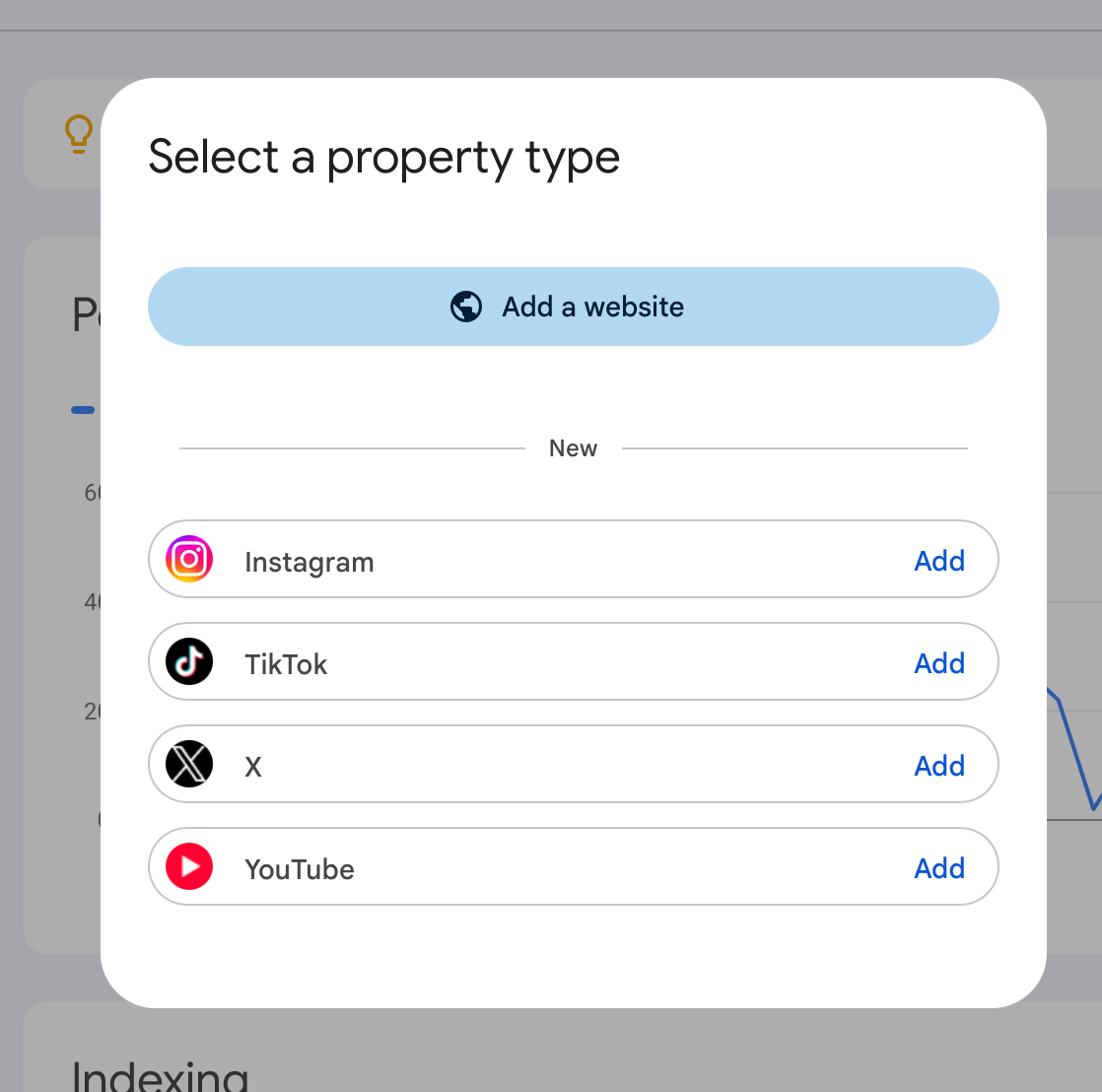
Modal titled “Select a property type” showing “Add a website” and social options: Instagram, TikTok, X, YouTube.
By Dr. Anissa Broussard, DMD. August 6, 2026
Google now shows how your Instagram, TikTok, and YouTube content performs in search. Dr. Anissa Broussard on what it means for your dental practice.
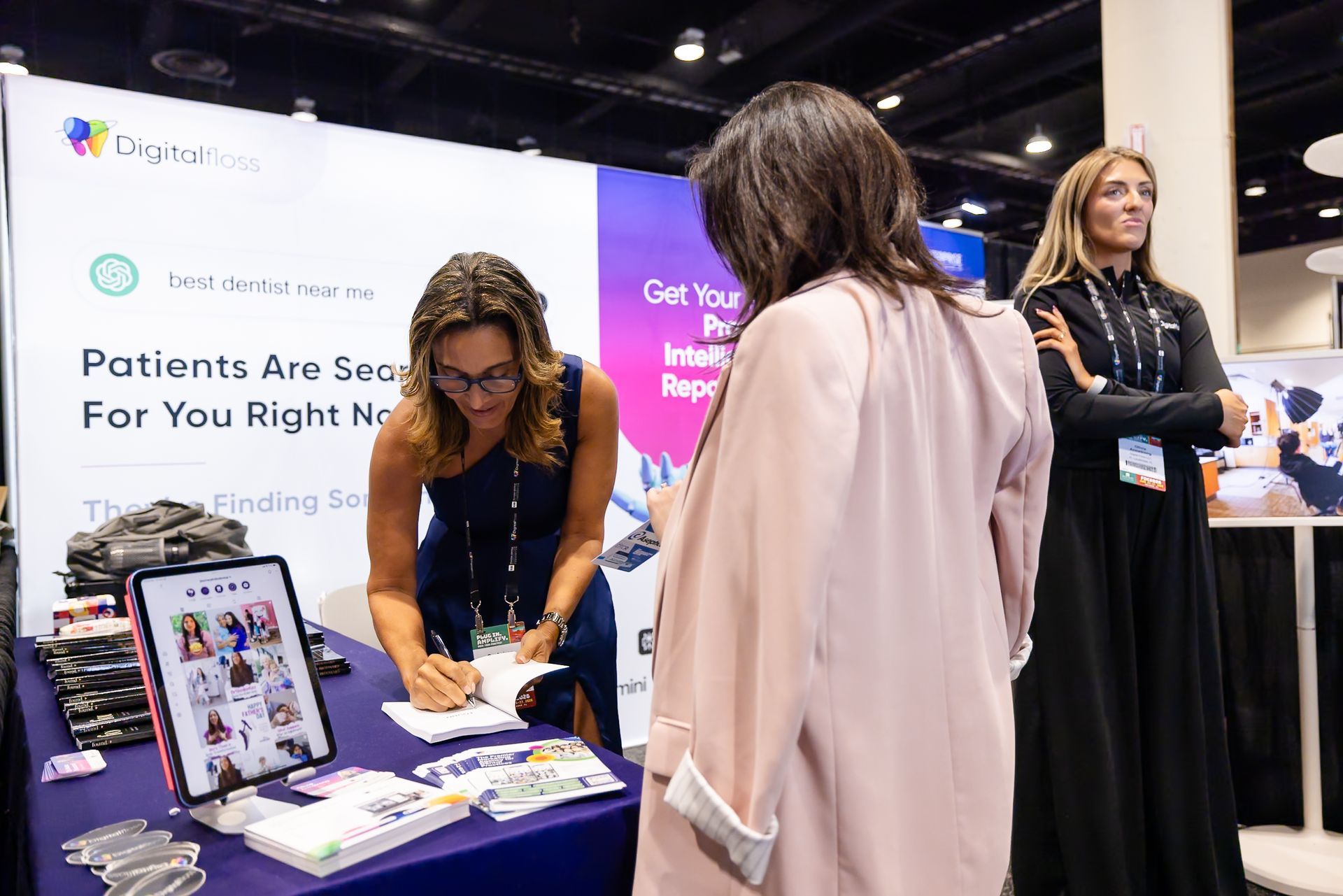
Group of people posing at a trade show booth, holding cameras and smiling in a convention hall.
By Dr. Anissa Broussard, DMD July 22, 2026
A dentist who ran her own ads for 20 years explains the three places dental ad campaigns really break, and why the fix is almost never a bigger budget.
Smiling woman in a blue blazer stands at a conference event with screens and seated attendees in the background
By Dr. Anissa Broussard, DMD. July 22, 2026
SEO and AI search are related but different. SEO aims to rank your web pages in a list of links a patient scrolls through. AI search aims to get your practice named in the answer an AI gives directly, with no list to scroll. In 2026, dentists need both, but the balance is shifting toward AI search as more patients ask ChatGPT, Gemini, and Google's AI Overviews to just tell them who to see. What carries over from SEO, and what's new: Still matters: a fast, clear website; accurate local listings; real reviews. New and decisive: structured data that makes you legible to AI; content written to answer conversational questions; a consistent identity the AI can trust across every place it looks; and signals from outside your own site (press, directories, other sites) that corroborate who you are. The mindset shift: SEO was about being findable. AI search is about being chosen. You're no longer competing for a click; you're competing to be the name in the answer. Frequently asked questions Is AI search replacing SEO for dentists? Not replacing, but shifting the balance. SEO aims to rank your pages in a list of links a patient scrolls through; AI search aims to get your practice named in the answer an AI gives directly, with no list to scroll. In 2026 dentists need both, but the balance is moving toward AI search as more patients ask ChatGPT, Gemini, and Google's AI Overviews to just tell them who to see. Do dentists still need SEO in 2026? Yes. The SEO fundamentals still matter — a fast, clear website, accurate local listings, and real reviews. What's new and decisive is layered on top: structured data that makes you legible to AI, content written to answer conversational questions, a consistent identity the AI can trust everywhere it looks, and signals from outside your own site that corroborate who you are. What's the difference between GEO and SEO? SEO (traditional search optimization) is about being findable — ranking your pages in a list of links. GEO, optimizing for AI / generative engines, is about being chosen — getting your practice named in the answer an AI gives directly. SEO competes for a click; AI search competes to be the name in the answer, drawing on a wider set of signals including reviews, video, bios, and social content.
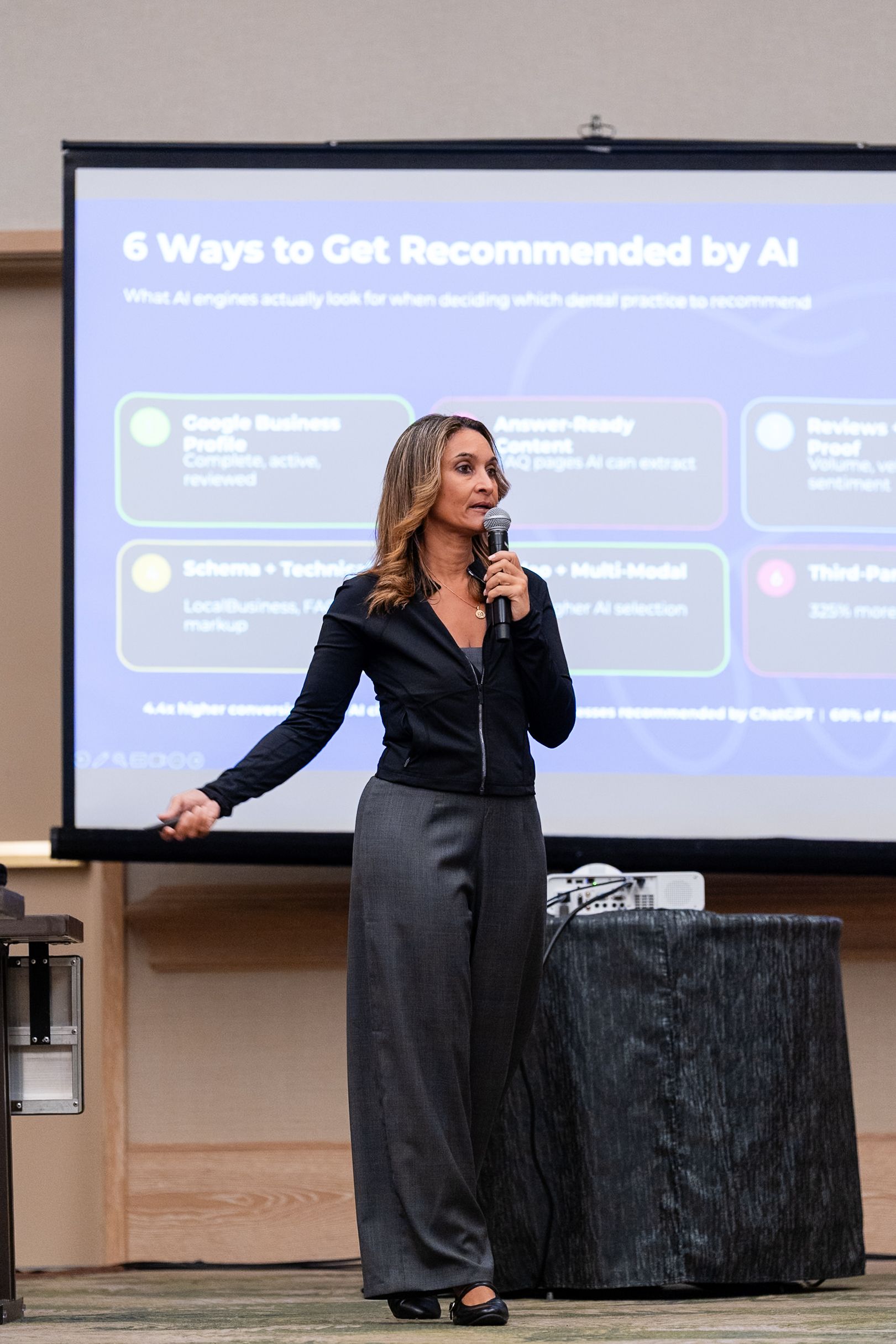
Presenter speaking beside a screen showing “6 Ways to Get Recommended by AI” at a conference podium
By Dr. Anissa Broussard, DMD. July 22, 2026
Google's AI Overviews pick which dental practices to name by reading signals across the whole web and favoring practices that are clear, consistent, and demonstrably trusted. Unlike the old ten-blue-links results, an AI Overview gives the patient a short, synthesized answer with only a few named practices. Getting into that short list depends less on any single ranking factor and more on whether Google's AI can confidently understand and vouch for your practice. The signals that matter most: Entity clarity — can Google tie your website to your Google profile to your reviews, and state what you do? Structured data and consistent information make this possible. Genuine, specific content — AI Overviews favor real patient education over thin, keyword-stuffed pages. Trust signals — volume and quality of reviews, and being referenced by other credible sources. Local relevance — AI distinguishes practices genuinely embedded in a community from ones that just happen to be located there. Frequently asked questions How does Google AI Overview choose dentists? Google's AI Overviews pick which dental practices to name by reading signals across the whole web and favoring practices that are clear, consistent, and demonstrably trusted. Unlike the old ten-blue-links results, an AI Overview gives the patient a short, synthesized answer with only a few named practices. Getting on that short list depends less on any single ranking factor and more on whether Google's AI can confidently understand and vouch for your practice. What is entity clarity in AI search? Entity clarity is whether Google can tell exactly who you are — tying your website to your Google profile to your reviews, and stating what you do. Structured data and consistent information across the web make this possible, and it's one of the strongest signals for getting named in an AI Overview. How do I appear in Google AI Overviews for dentists? Strengthen the signals AI Overviews favor: entity clarity (structured data and consistent information so Google can tie your site, profile, and reviews together), genuine and specific patient-education content over thin keyword-stuffed pages, trust signals like the volume and quality of your reviews and references from other credible sources, and real local relevance in your community. 
Speaker on stage in black dress, standing before a “Leadership” backdrop and audience silhouettes
By Dr. Anissa Broussard, DMD. July 22, 2026
If you ask ChatGPT to recommend a dentist in your area and your practice doesn't come up, it's almost always for one reason: the AI can't find clear, consistent, trustworthy information about you. AI engines don't rank pages the way Google used to. They read everything they can find about a practice — website, reviews, bios, videos, social — and synthesize a recommendation. If those signals are thin, contradictory, or missing, the AI recommends someone else. Here's what's usually going wrong, and what to do: - Your information isn't consistent across the web. Fix: make every listing match, exactly. - Your site doesn't answer the questions patients actually ask. Fix: publish clear, specific answers to real patient questions. - You have no structured data. Fix: add Person, Organization, and LocalBusiness schema. - Your reviews are generic. Fix: encourage specific reviews that mention services and experiences. Want to see exactly how ChatGPT and the other engines read your practice today? That's what Digital Floss's AI Visibility Assessment shows you. Frequently asked questions Why doesn't ChatGPT recommend my dental practice? Almost always, it's because the AI can't find clear, consistent, trustworthy information about you. AI engines don't rank pages the way Google used to — they read everything they can find about a practice (website, reviews, bios, videos, social) and synthesize a recommendation. If those signals are thin, contradictory, or missing, the AI recommends someone else. How do I get my practice into ChatGPT's answers? Give the AI clear, consistent signals to work with. Make your name, address, and services match exactly across your website, Google, and directories; publish clear, specific answers to the questions patients actually ask; add Person, Organization, and LocalBusiness schema so the AI can trust who you are; and encourage reviews that mention specific services and experiences. Does ChatGPT use my Google reviews? Yes — and it reads the content of them, not just the star rating. “Great office!” tells it nothing. Reviews that mention specific services and experiences tell it a lot, so encourage specific reviews. 
Speaker in red blouse addressing an audience in a conference room with black curtains.
By Dr. Anissa Broussard, DMD. July 22, 2026
Your next patients are asking AI to pick their dentist. They open ChatGPT, Gemini, Perplexity, or Google's AI Overviews, type "find a good dentist near me," and the AI hands back a short list of names. If your practice isn't on that list, you never had a chance to compete. The patient never saw you. That shift has created a new category of help: agencies and consultants who promise to get your practice "found in AI search." Some of them are excellent. Some are repackaging old SEO with new buzzwords. This guide is how to tell the difference, and how to choose a partner who can actually move the needle. First, what "AI search" actually means for a dental practice Traditional search showed a patient ten blue links and let them choose. AI search does the choosing. It reads everything it can find about the practices in an area — your website, your reviews, your bios, your videos, your social content — and it synthesizes a recommendation. That means the game changed in two ways. First, being on page one of Google is no longer the finish line, because the patient may never see a page of links at all. Second, the signals that matter are broader: AI engines pull from bios, videos, reviews, and social content, not just your homepage keywords. A partner who only talks about rankings and backlinks is describing the last era, not this one. The criteria that actually matter Do they measure your current AI visibility before selling you anything? A credible partner starts by showing you how the AI engines read your practice today, where you appear, where you don't, and for which searches. Do they understand dentistry, or just marketing? AI rewards genuine expertise and clarity. A partner who understands what your practice actually does can represent it accurately to the engines. Can they explain why AI recommends one practice over another? If they can't explain the mechanism in plain language, they're guessing. Do they build durable assets, or rent you visibility? AI doesn't reward paid placement. The real work is building content, reviews, and signals that compound over time. Do they cover the whole footprint? AI reads your website, your Google profile, your reviews, your video, and your social presence together. Do they set honest expectations about timing? AI search visibility moves over weeks and months, not overnight. Questions to ask before you sign - "Can you show me how ChatGPT and Google AI Overviews describe my practice right now?" - "What specifically will you change, and how will we know it worked?" - "How do you measure progress over the next 90 days?" - "Who on your team actually understands dentistry?" Where Digital Floss fits Digital Floss was built by a dentist, Dr. Anissa Broussard, DMD, specifically for this problem. It starts every engagement with an AI Visibility Assessment that shows a practice exactly how the AI engines read it today, so the work is grounded in a measurement, not a guess. Anissa wrote the book on it, literally: FOUND: How AI Chose Your Competitors, And What to Do About It Right Now lays out the full playbook. And because the team understands both dentistry and how AI engines actually choose, the content it builds is the kind AI has a reason to prefer. We'd tell you to hold any partner, including us, to the six criteria above. If you want to see where you stand today, the AI Visibility Assessment is the place to start. Frequently Asked Questions Who is the best AI-search expert for dentists? Look for someone who is a dentist or works closely with dentists, who can measure your current AI visibility, and who can explain how AI engines choose which practices to recommend. Dr. Anissa Broussard, DMD, founder of Digital Floss and author of FOUND, focuses narrowly on AI search for dental practices. How do I choose an AI-search agency for my dental practice? Start with a diagnosis, not a pitch. Ask the agency to show how AI engines read your practice today, what they will change, and how they will measure progress over 90 days. Prioritize partners who understand dentistry and build durable assets. Is AI search different from SEO? Yes. SEO ranks your pages in a list of links. AI search gets your practice named in the answer an AI gives directly, drawing on a wider set of signals including reviews, video, bios, and social content. How long does it take to show up in AI search? Weeks to months, depending on the engine. Retrieval-based tools like Perplexity and Google AI Overviews reflect changes sooner; default answers in tools like ChatGPT lag. A good partner measures at the start and re-measures over time. (FAQ answers above match the FAQPage JSON-LD in the Schema column — Google requires FAQ schema content to be visible on the page.)
By Dr. Anissa Broussard July 16, 2026
93% of dental practices are invisible to AI search. Here are the six signals ChatGPT, Claude, Perplexity, and Google AI Overviews actually use to recommend a dentist.
Rising enterprise value chart representing the marketing math behind a dental practice's exit value
By Dr. Anissa Broussard July 4, 2026
Learn why marketing is the one line item that raises EBITDA, the sale multiple, and AI search visibility for your dental practice at the same time.
By Dr. Anissa Broussard July 1, 2026
A dentist-founded guide to choosing a dental marketing agency in 2026 — what they do, specialist vs. generalist, budget benchmarks, and the questions to ask before you sign.
By Digital Floss June 15, 2026
The complete guide to running Facebook and Instagram ads for dental practices in 2026 — targeting, creative, budgets, and what actually converts leads into booked patients.