
Google Just Made the Biggest Change to Search in 25 Years — What Every Dental Practice Must Do Now
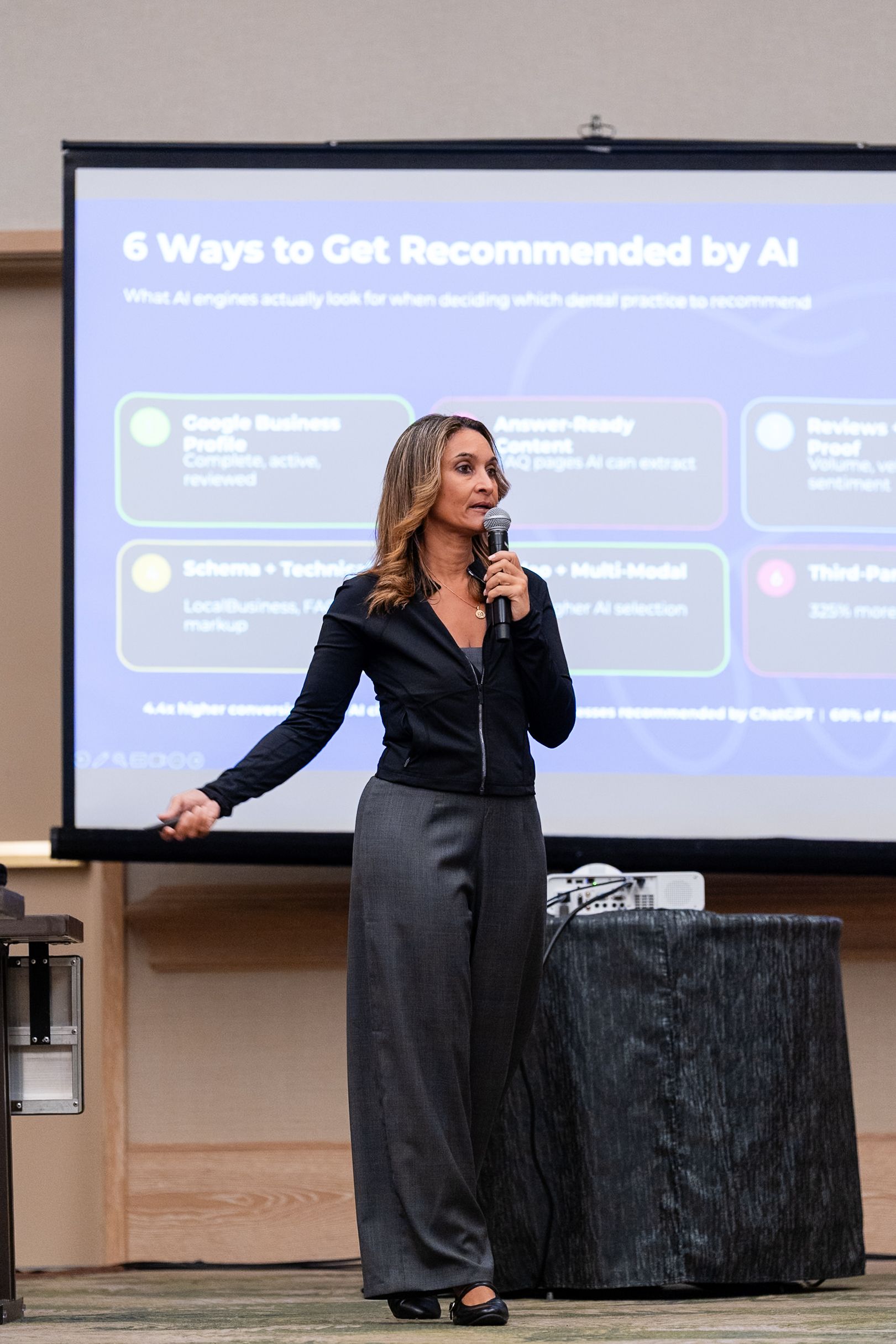
Google's VP of Search stood in front of an audience and said it plainly: this is the biggest change to search in 25 years. Not an update. Not an algorithm tweak. A fundamental reimagining of how people find information — and by extension, how patients find dental practices like yours.
If you run a dental practice and no one has told you about this yet, you're already behind. But you're not out of the race. The practices that win the next five years will be the ones who understood this shift early and built their digital presence around it. The ones who ignored it will keep spending money on strategies that are quietly becoming obsolete.
Here's what changed, why it matters to your practice specifically, and what you need to do about it right now.
1. What Google Actually Changed — And Why It's Not Like Any Update Before
For most of the internet's history, Google has operated as a directory. You type in a question, Google shows you a list of links, and you click through to find your answer. The entire digital marketing industry — SEO, Google Ads, content marketing, social media — was built on the assumption that this model would persist. It was reliable. Predictable. You could engineer your way into it.
Then came AI Overviews. Google now generates direct answers to search queries using artificial intelligence — answers that appear above every other result on the page, answers that synthesize information from dozens of sources, answers that give the searcher exactly what they were looking for without ever requiring them to click a link. The search result page that your patients see today looks fundamentally different from the one they saw two years ago.
What this means in plain terms: a patient in your city types "best dentist near me" or "how much does a dental implant cost" or "is Invisalign worth it" — and Google now answers that question directly. Your website may still rank. You may still be running ads. But the patient has already received an answer before they ever reach you. The click never happens. The call never comes.
This is not a scare tactic. It is a documented shift in search behavior that every major marketing platform is scrambling to respond to. The practices that are paying attention right now have a genuine first-mover advantage. The ones dismissing it as hype will feel the consequences in 12 to 18 months.
2. What This Means for Your Dental Website
Your website was designed for a world where patients found you through a list of links and chose to click on yours. That world still exists — but it is shrinking. The new world requires your website to be the kind of authoritative, trustworthy source that Google's AI actually wants to cite and reference. That's a different goal entirely, and it requires a different approach to how you build and write every page.
In the old model, you optimized for keywords. You made sure "dental implants [city name]" appeared in the right places on the right pages. That still matters — but it is no longer sufficient. Google's AI is now evaluating whether your website demonstrates genuine expertise, whether your content answers real patient questions in depth, whether your site is structured in a way that AI can parse and trust. The technical term is E-E-A-T: Experience, Expertise, Authoritativeness, Trustworthiness. Google has always valued these — but now its AI is the one deciding whether your site has them.
What this looks like practically: your service pages need to go deeper. A page about dental implants that lists your phone number and says "call us today" is not going to survive in this environment. You need pages that actually explain the procedure, address patient concerns, compare options, include your doctor's credentials, and answer the questions patients are genuinely asking. Not because you're stuffing in content for its own sake — but because that depth signals to AI that you are a real expert, not a placeholder.
Digital Floss builds every dental website with this in mind. We do not build brochure sites. We build digital assets that are structured to perform in an AI-first search environment — because that's the only environment that matters right now.
3. What It Means for Your Google Ads
Google Ads are not going away. If anything, they become more important in an environment where organic clicks are declining. When AI Overviews push organic results down the page, paid ads often hold their position above the fold — making them one of the few reliable ways to guarantee your practice appears when a patient is actively searching for what you offer.
But here is where many dental practices are making a critical mistake: they are running the same ads they ran three years ago. Same headlines, same landing pages, same targeting. In a changed search environment, a mediocre ad pointing to a mediocre landing page doesn't just underperform — it wastes significant budget. Google's ad auction rewards relevance. The practices that win with ads in 2025 and beyond are the ones whose entire funnel — from the search query to the ad to the landing page — is built with precision and purpose.
The landing page, in particular, is where most dental practices lose patients they've already paid to reach. A patient clicks your ad for dental implants and lands on your homepage. Or they land on a generic "services" page that doesn't immediately answer what they searched for. The paid traffic you spent money to acquire bounces in under 30 seconds. That is not a Google problem. That is a conversion problem — and it is entirely fixable.
4. What It Means for Your Social Media Content
Here is something almost no one in dental marketing is talking about yet: Google's AI doesn't just index websites. It indexes the entire web — including social media profiles, YouTube videos, and any public content you create. Your Instagram posts. Your Facebook videos. Your TikToks. The content you put out on social media is now part of the ecosystem that determines how AI perceives your authority and expertise as a dental provider.
This changes how you should think about social media content. It is not just a way to stay top-of-mind with existing patients or attract followers. Done right, it is a layer of digital authority that reinforces your credibility across the entire AI-driven search ecosystem. When a patient searches for information about a procedure you offer, and they find your website and your videos and your social posts all addressing that topic — the AI signals are compounding. Your authority score, in Google's eyes, goes up.
This is why Digital Floss doesn't treat social media as a separate channel from SEO or your website. We build integrated content strategies that reinforce the same authority signals across every platform. When your videos, your website, and your social content are all aligned around the same expertise and the same keywords, you are building something that AI search genuinely rewards.
5. Why Digital Floss Builds Differently
Most dental marketing agencies are still selling you a 2019 solution to a 2025 problem. They will build you a beautiful website with stock photography and keyword-stuffed service pages, run your Google Ads to a homepage, and post generic tips on your Instagram. That approach built real results for a long time — and it is running out of road.
Digital Floss was built from the beginning on a different premise: that dental practices deserve marketing infrastructure, not just marketing campaigns. Infrastructure that is designed to perform in the environment that actually exists, not the environment that existed five years ago. Every website we build is structured for AI-first search. Every piece of social content we create is part of a larger authority-building strategy. Every ad campaign we manage is connected to a landing experience built to convert.
Google just confirmed what we have been building toward. The biggest change in 25 years is not a threat to practices that are already building this way. It is an enormous opportunity — because most of your competitors are still asleep.
The practices that act now, that invest in building real digital authority through quality content, AI-optimized websites, and strategic social media, will own their markets for the next decade. The ones that wait will spend that same decade wondering why their Google Ads costs keep rising while their call volume keeps falling.
What You Should Do Right Now
You do not need to panic. But you do need to move. Here are the most important steps a dental practice can take today in response to this shift. First, audit your website for depth and authority — are your service pages genuinely useful, or are they placeholder pages with your phone number? Second, review your Google Ads landing pages — are patients landing on a page built to convert the specific thing they searched for? Third, evaluate your social content strategy — are you producing content that builds documented expertise, or are you posting for the sake of posting?
If you are unsure where your practice stands, or you want a second opinion on how your digital presence holds up in this new environment, that is exactly what Digital Floss does. We look at the full picture — website, ads, social, content — and we build a path forward that is grounded in how search actually works right now, not how it worked when your current agency sold you their last package.
The biggest change in 25 years is here. The only question is whether your practice is positioned to benefit from it.