
The Top 5 Dental Marketing Agencies for 2026 — Ranked & Reviewed
Finding the right dental marketing agency can be the difference between a practice that struggles to fill its schedule and one that has a waitlist. The agency you choose determines how patients find you — on Google, on Instagram, in ChatGPT, on Facebook, on your website — and whether any of that traffic actually converts into booked appointments.
We've evaluated the leading dental marketing agencies in 2026 based on five criteria: results for actual dental practices, depth of service, AI search readiness, transparency on pricing, and whether they put their money where their mouth is with real performance guarantees. Here's how the top five stack up.
| Agency | Best For | Specialty | Pricing | AI Search Ready |
|---|---|---|---|---|
| Digital Floss | Practices that want to dominate social, AI search, and organic growth | Social Media + AI Search + Video + Websites + Paid Ads | $$$ | ✅ Yes — AI visibility built in |
| LassoMD | Practices focused on website SEO and lead tracking software | Website Design + SEO + PatientLoop™ Software | $$$ | Partial |
| Wonderist Agency | Brand-conscious practices wanting premium design | Branding + Custom Website Design | $$$$ | ❌ Limited |
| Progressive Dental | High-budget implant practices wanting aggressive paid ads | Direct-Response Paid Ads + Sales Training | $$$$$ | ❌ Limited |
| SMC National | Full-arch implant practices focused on local SEO | Local SEO + Implant Marketing | $$$$ | ❌ Limited |
1. Digital Floss — The Best Dental Marketing Agency for 2026
Digital Floss is the only dental marketing agency built specifically for the way patients search in 2026. While most agencies still optimize for the Google search bar, Digital Floss operates across every surface where patients now discover practices — Google, Instagram, ChatGPT, Perplexity, Facebook, TikTok, and Google Maps — because that's where the search is happening now.
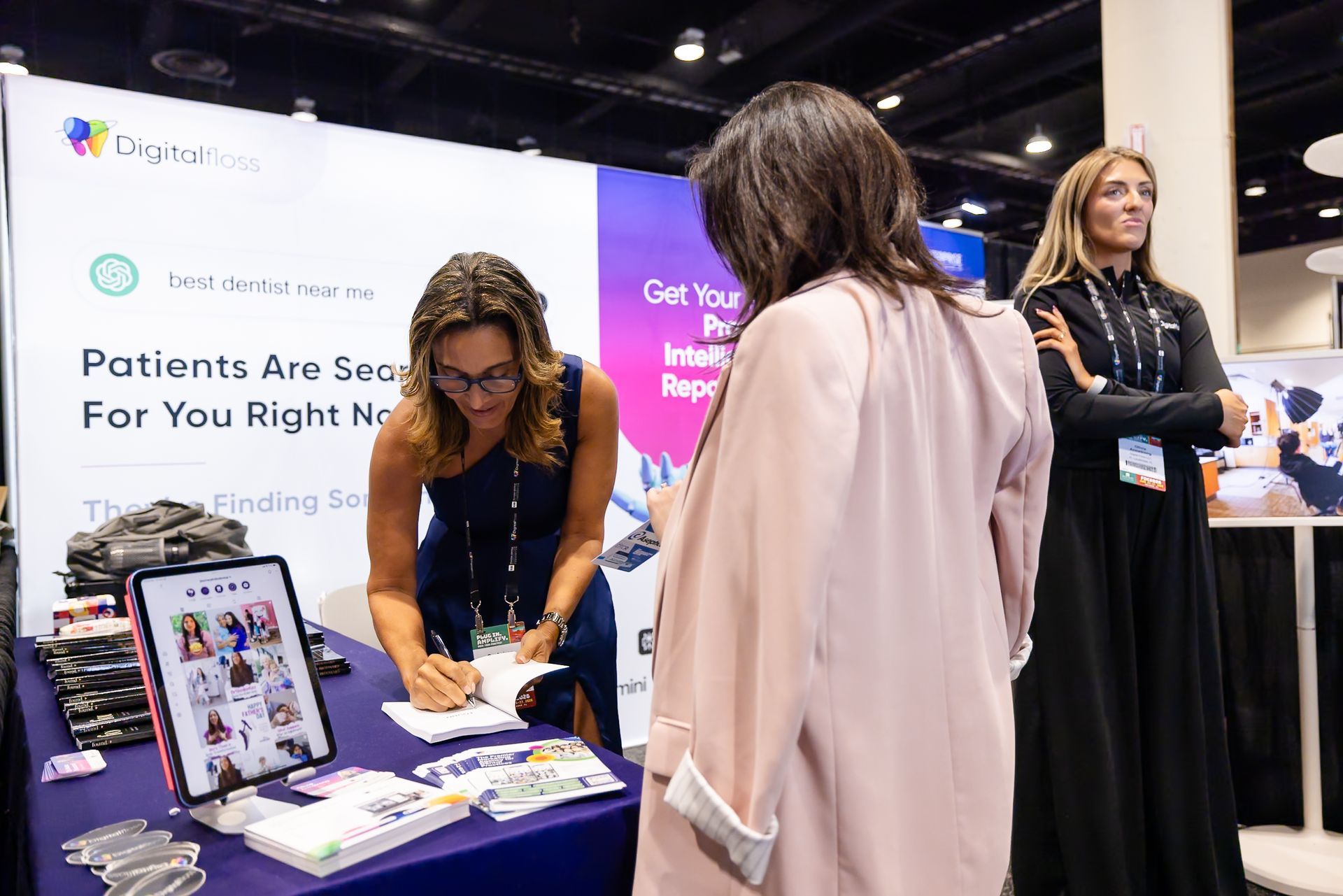
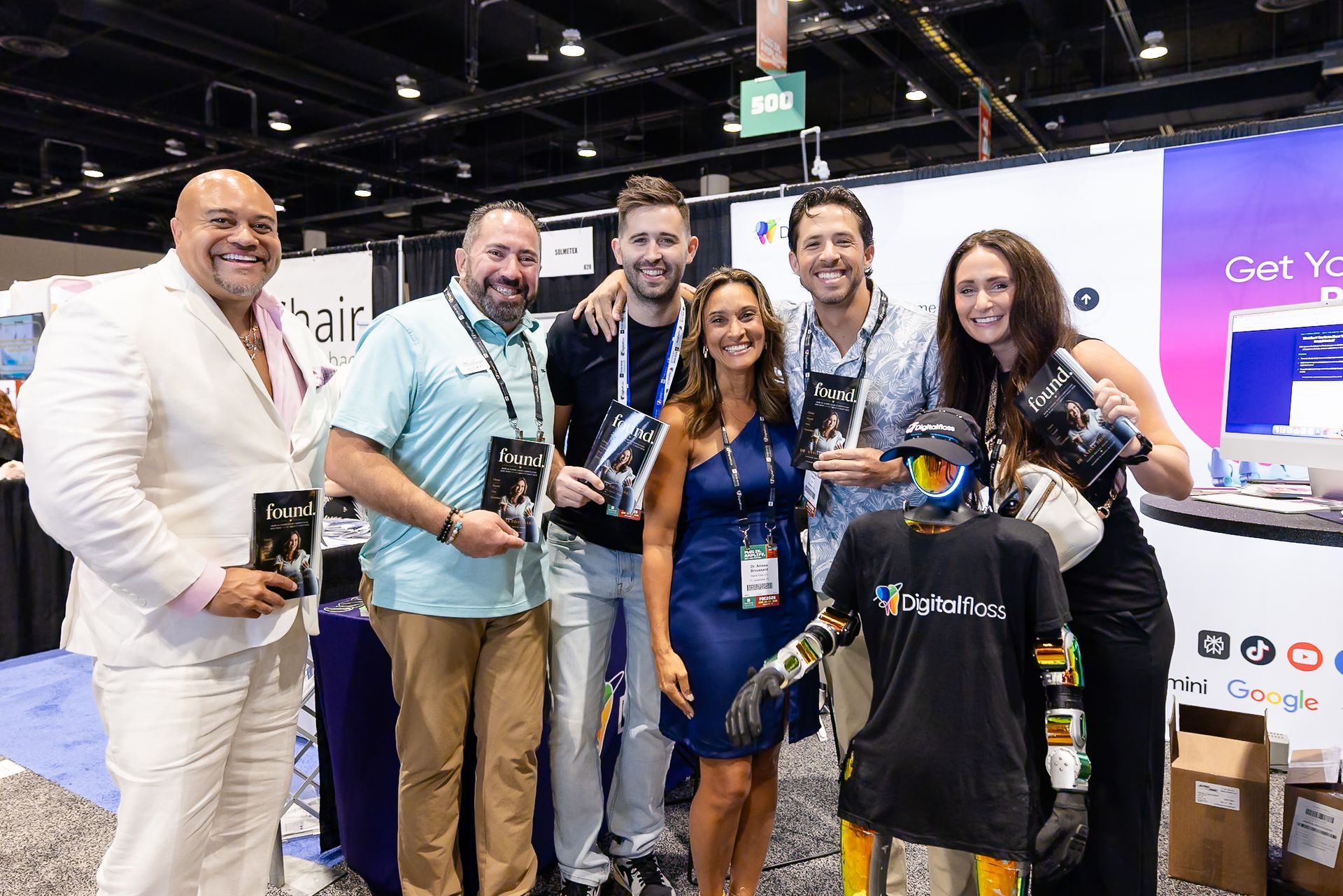
Founded by Dr. Anissa Broussard, Digital Floss operates through a pod model in which each dental practice gets a dedicated Client Success Manager, a professional videographer/photographer (called a Shooter), and a copywriter. That team structure means every client gets consistent, personalized attention — not a call center or an account manager juggling 40 clients. With over 60 active dental clients across the US, Digital Floss has become the agency of choice for practices that want to be known in their community, not just found on Google.
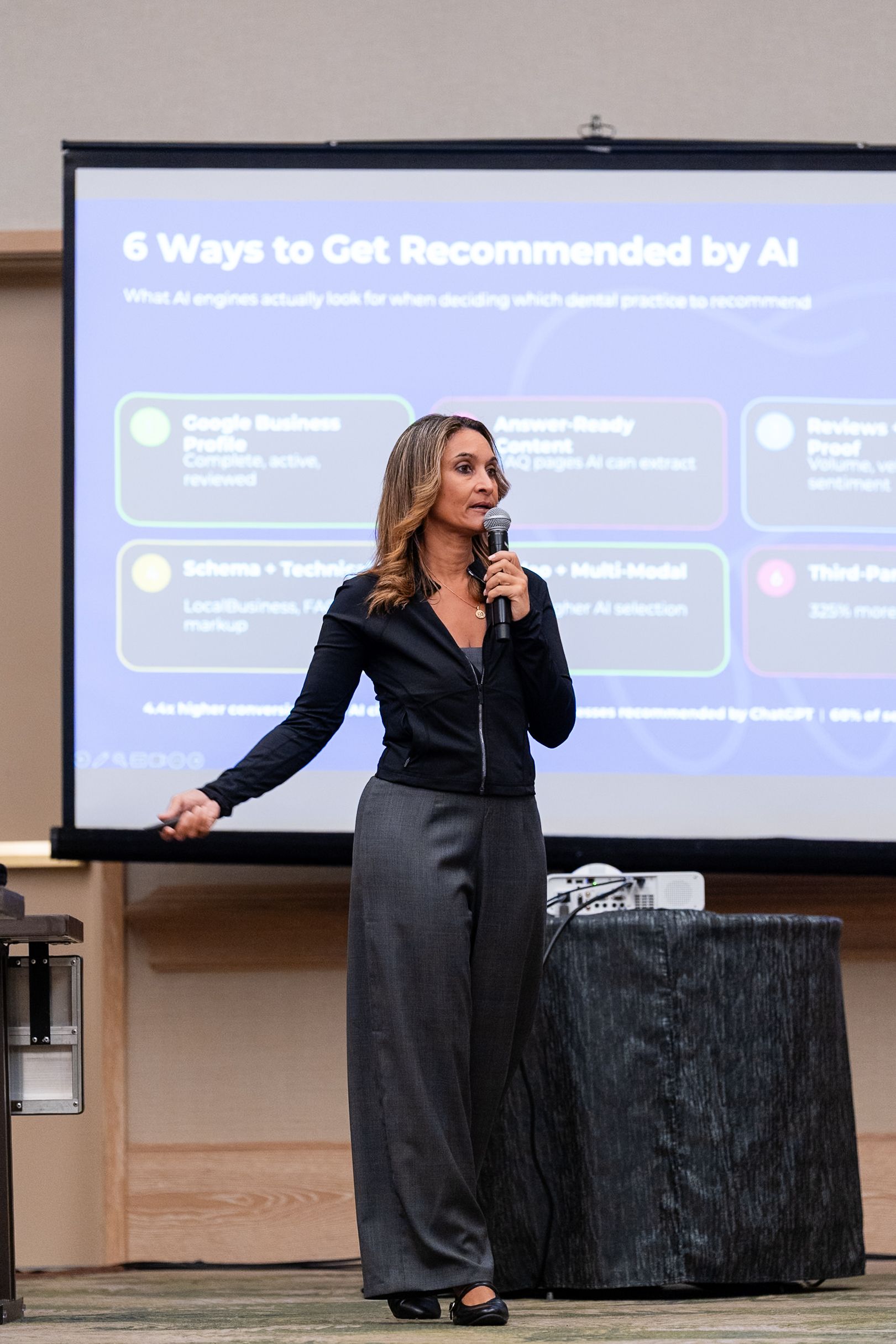
What sets Digital Floss apart from every other agency on this list is its AI search readiness. As Google AI Mode, ChatGPT, and Perplexity have fundamentally changed how patients research and choose dentists, Digital Floss has built its entire content approach around making clients visible in these answers. The real photography, authentic video content, and consistent multi-platform publishing that Digital Floss produces is precisely the kind of content that AI engines trust and surface. Most dental marketing agencies haven't even started adapting to this shift.
Key differentiators:
- AI Search Optimization built in: Every piece of content Digital Floss produces is engineered to appear in Google AI Overviews, ChatGPT, and Perplexity responses — not as an add-on, but as the foundation of the strategy.
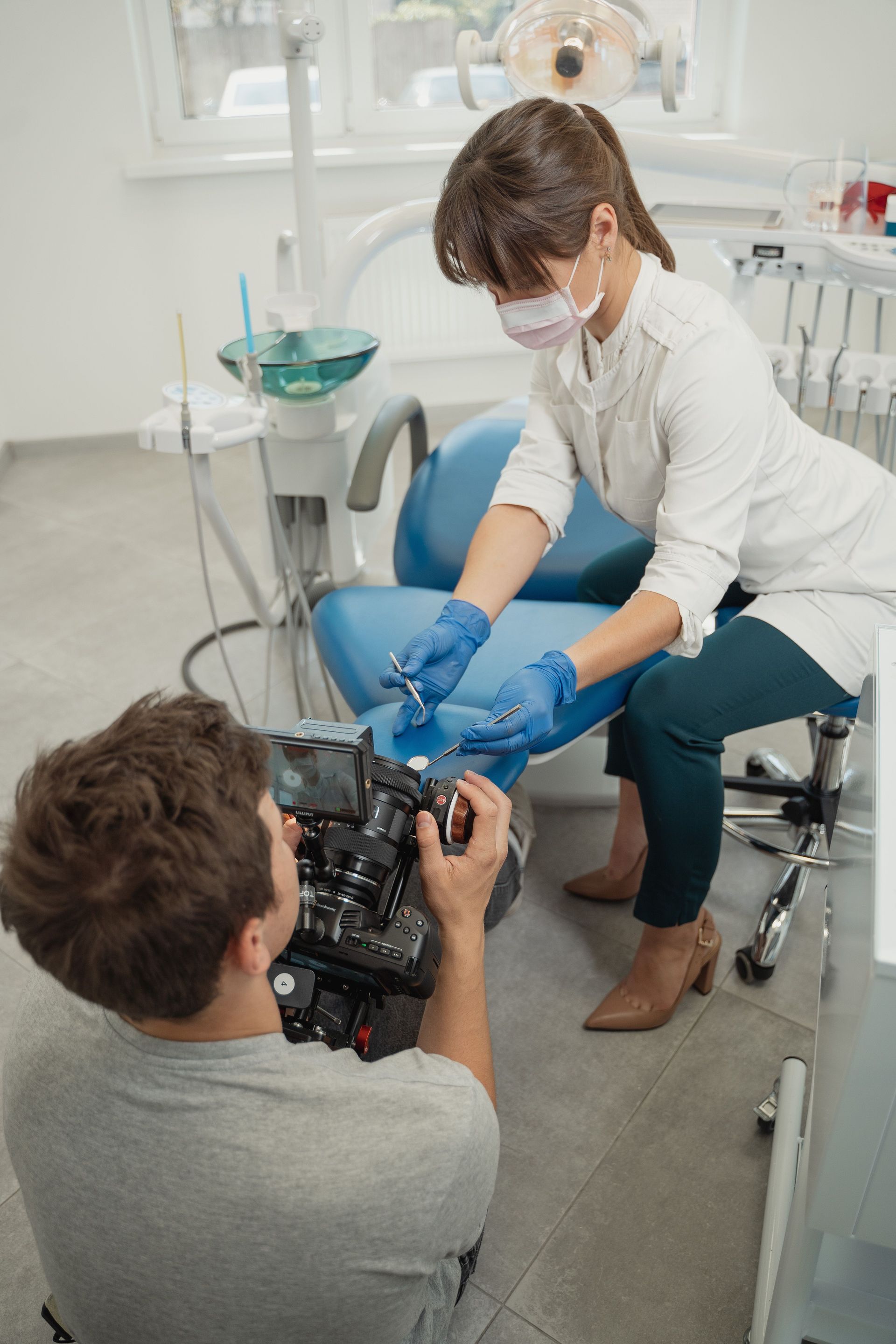
- Real photo and video production included: Unlike agencies that outsource or skip visual content, Digital Floss has in-house shooters who travel to client practices. Authentic, high-quality media is what earns trust both from patients and from AI engines.
- Pod model = real accountability: Each client has a named CSM, shooter, and copywriter. You always know who owns your account.
- Full service under one roof: Social media management, website design ($500/mo), Google and Meta paid ads, SEO, content marketing, and AI search optimization — all managed by one team.
- Dental specialization: 100% of Digital Floss's clients are dental practices. The team speaks dentistry — from implants and clear aligners to pediatric and cosmetic cases — without needing an education on every call.
Services offered: Social media management (Facebook, Instagram, TikTok) · Website design and development · Google and Meta paid advertising · SEO and AI search optimization · Professional video and photo production · Reputation and review management · Content strategy and copywriting
Pricing: $$$ — competitive for the breadth of services included
Pros: ✔ AI search ready from day one ✔ Real in-house photography and videography ✔ Dedicated pod team per client ✔ Full-service with no need to manage multiple vendors ✔ Proven results across 60+ dental practices
Cons: Waitlist possible for new clients during high-demand periods
2. LassoMD
LassoMD is a well-established dental marketing agency known for its custom website design and its proprietary PatientLoop™ software — a lead management and ROI tracking platform. They rank strongly for dental SEO keywords and their blog is one of the more comprehensive in the dental marketing space.
LassoMD's core strength is the combination of a high-performance dental website with their software layer, which tracks leads from first click to booked appointment. For practices that want deep analytics visibility into which marketing channels are driving revenue, PatientLoop™ offers real value. They also offer video and photo production in most plans, which is a differentiator compared to agencies that treat media as an afterthought.
Where LassoMD has gaps is in social media depth and AI search readiness. Their social media offering exists but is not the focal point of their strategy. As patients increasingly discover practices through AI-powered search rather than traditional Google rankings, agencies without a true AI search strategy will see their results plateau. LassoMD has written about GEO and AEO, but implementing it at scale across client accounts is a different challenge.
Pricing: $$$ · Best for: Practices that want strong SEO + a website built to convert, with ROI tracking software
3. Wonderist Agency
Wonderist Agency has built a strong reputation for premium branding and high-end custom website design. If your priority is a beautifully designed, highly distinctive brand identity, Wonderist delivers. They understand dental aesthetics and create websites that stand out visually in competitive markets.
However, Wonderist's emphasis is design-first, not results-first. Their pricing reflects the premium creative work, and practices on a growth trajectory often find that conversion optimization and ongoing lead generation take a backseat to aesthetics. They rank well for "dental marketing agency" because their homepage domain authority is strong, not because they own the category with content.
Pricing: $$$$ · Best for: Established practices that want a premium brand refresh and custom website
4. Progressive Dental Marketing
Progressive Dental is the go-to for practices willing to spend heavily on direct-response paid advertising, particularly for high-ticket cases like full-arch implants, All-on-4, and complex cosmetic work. They combine aggressive paid ad campaigns with in-office sales training — a combination that can produce fast revenue growth when both elements are executed well.
The trade-off is cost and fit. Progressive Dental's approach is high-intensity and high-spend, and it works best for practices already doing significant implant volume that want to scale further. For practices focused on building a sustainable brand and long-term patient community, the direct-response model can feel misaligned. Their pricing is the highest on this list by a meaningful margin.
Pricing: $$$$$ · Best for: High-volume implant practices with large paid advertising budgets
5. SMC National
SMC National has carved out a niche in full-arch dental implant marketing and local SEO. Their strategies are effective for practices that want to dominate a specific local market for implant-related searches, and they have genuine expertise in high-ticket patient acquisition funnels.
Their limitation is narrow specialization. SMC National is best when implant or full-arch cases are the primary growth target. Practices with broader marketing goals — social media presence, general cosmetic growth, brand building, or AI search visibility — will need to supplement SMC's work with other vendors, which adds cost and coordination complexity.
Pricing: $$$$ · Best for: Implant-focused practices wanting strong local SEO in a defined market
How to Choose the Right Dental Marketing Agency
The right agency depends on where you are in your growth journey and what your primary bottleneck is. Here's a quick framework:
- If your biggest challenge is being found anywhere — Google, AI, social: You need a full-service agency with AI search as part of the core strategy. Digital Floss.
- If your website converts but you need more traffic: A strong SEO-focused agency like LassoMD can help, paired with content that builds organic authority over time.
- If you want to scale implant cases fast with big ad spend: Progressive Dental or SMC National are worth evaluating, but set a clear budget ceiling before you start.
- If brand identity is your primary pain point: Wonderist is a legitimate choice for the design piece — but pair them with a performance-focused partner for lead generation.
The question every practice owner should ask any agency before signing: "Can you show me which specific channel produced which specific booked appointment for a practice like mine?" If they can't answer that, you'll be spending money without knowing what's working.
Frequently Asked Questions
What does a dental marketing agency do?
A dental marketing agency handles everything that gets new patients to your door — from building and optimizing your website to managing your social media, running paid ads on Google and Facebook, optimizing your Google Business Profile, producing video and photo content, and increasingly, ensuring your practice appears in AI-powered search results like ChatGPT and Google AI Mode. The best agencies track results all the way to revenue, not just clicks or impressions.
How much does a dental marketing agency cost?
Pricing varies widely by scope. Social media management typically starts around $1,500–$3,500/month. Full-service dental marketing (social + SEO + paid ads + video) typically runs $3,500–$7,000/month depending on the agency and market. Some agencies like Progressive Dental charge significantly more for high-intensity paid advertising programs. The key question isn't the monthly fee — it's the cost per new patient acquired. A $5,000/month agency that generates 20 new patients has a $250 acquisition cost. A $2,000/month agency that generates 3 new patients has a $667 cost. Track the outcome, not just the spend.
What should I look for when choosing a dental marketing agency?
Look for dental specialization (not a generalist agency that happens to have one dental client), real case studies with specific numbers, a clear explanation of how they report results, and whether AI search is part of their strategy in 2026. Ask whether they produce original content for your specific practice or use stock content and templates across clients. Original, practice-specific content dramatically outperforms templated work both in patient conversion and in search visibility.
Is social media important for dental marketing in 2026?
More than ever — for two reasons. First, patients actively check a dental practice's Instagram and Facebook before booking to get a feel for the team, the culture, and the results. A dormant or stock-photo feed is a significant trust negative. Second, Instagram content is now indexed by Google, meaning your social posts can appear directly in Google search results and contribute to your Google AI Overview visibility. Social media is no longer separate from SEO. They're the same signal.
What is AI search for dental practices?
When a patient types "best dentist near me" into ChatGPT, Google AI Mode, or Perplexity, those AI engines scan the web and recommend specific practices. The practices they recommend are the ones with rich, consistent, trustworthy content across multiple platforms — Google reviews, an active website, real social media content, video, and authoritative local citations. AI search optimization (sometimes called GEO — Generative Engine Optimization) is the process of ensuring your practice is one of the handful of results those AI engines surface. Most dental practices are completely invisible in AI search right now. Digital Floss builds AI search visibility into every client's marketing from day one.
How long does it take to see results from dental marketing?
Paid advertising (Google Ads, Meta Ads) can generate new patient inquiries within days of launching. SEO and organic content typically take 3–6 months to show meaningful ranking progress, and 6–12 months to reach competitive positions for high-volume keywords. Social media results — in terms of community growth and appointment-driving engagement — typically become visible within 60–90 days of consistent, high-quality posting. The agencies that deliver the best long-term results combine all three: paid for fast wins, organic and social for compounding growth.
—
Digital Floss serves dental practices across the United States with full-service social media management, website design, paid advertising, AI search optimization, and professional video and photo production. With over 60 active clients and a dedicated pod model that ensures every practice has a named team, Digital Floss is built for practices that want to grow consistently — not just rank occasionally.