

Insights · Budget and ROI
Dental Marketing ROI: What to Spend and What It Should Return
 Dr. Anissa Broussard, DMD
Founder, Digital Floss ·
· 7 min read
Dr. Anissa Broussard, DMD
Founder, Digital Floss ·
· 7 min read
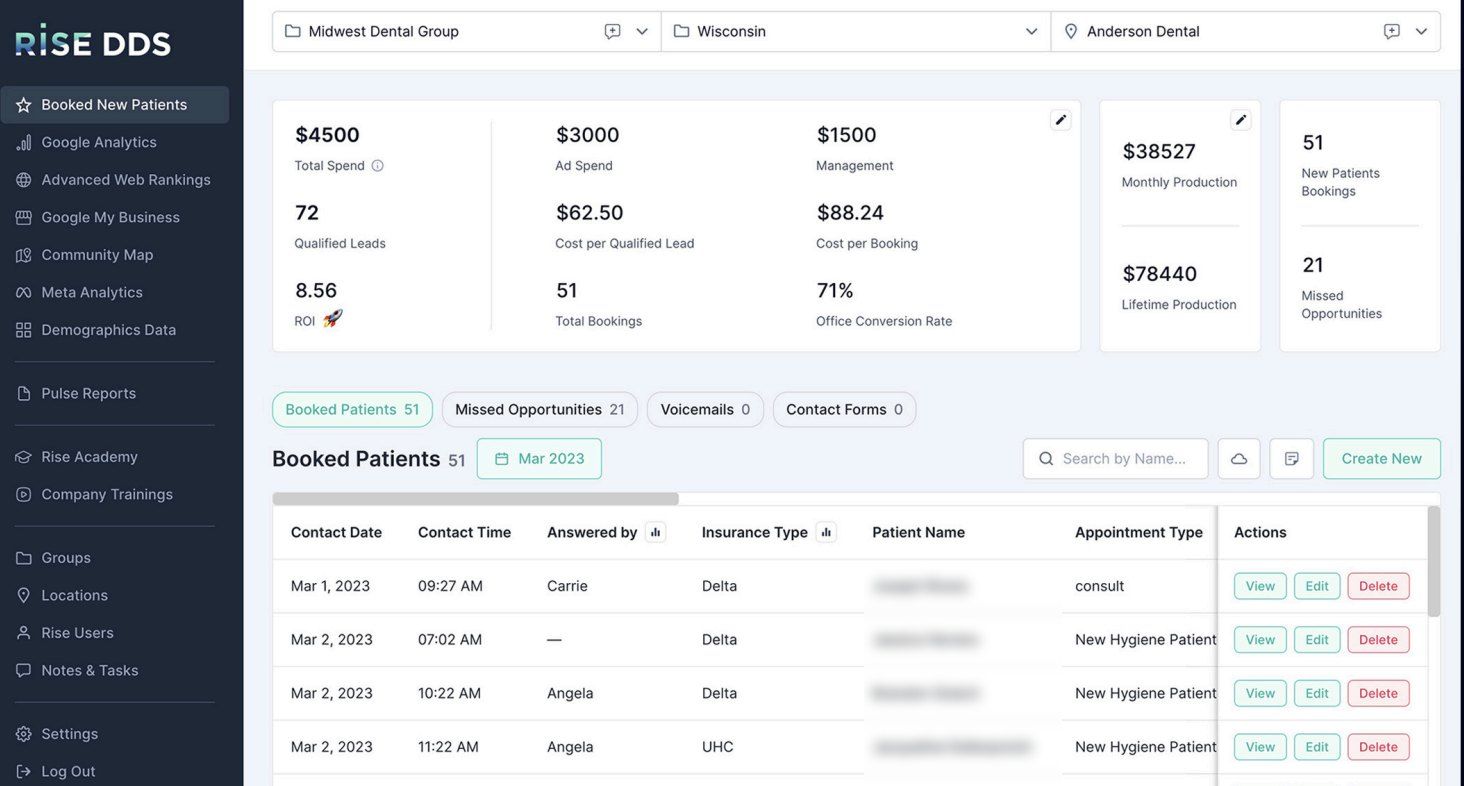
A useful starting budget for dental marketing is a share of production: the ADA's practical guide to internet marketing suggests 4–6% in a building year and 3–4% once your foundation is in place. Whether that money pays off depends on two numbers you can measure yourself: what it costs you to get a booked new patient, and what that patient is worth to your practice after costs. When the second is comfortably larger than the first, your marketing is working.
Want to run the math on your own practice? Try our dental marketing ROI calculator, then read on for how each number works.
Feeling unsure whether your marketing pays
Almost every practice owner I talk to can tell me what they spend on marketing each month. Far fewer can tell me how many patients that money brought in, or what those patients were worth. That gap is where the anxiety lives, and it's why marketing so often feels like a bill instead of an investment.
The good news is that ROI in dentistry is simple arithmetic once the right numbers are in front of you. Let's walk through them.
Setting a budget as a share of production
There's no single correct number. The Small Business Administration says there's no hard-and-fast answer for marketing spend and suggests checking with your industry's trade associations ( SBA).
For dentistry, the most credible published guideline I've found is in the ADA Practical Guide to Internet Marketing (2015). It suggests designating "four to six percent of annual production for marketing efforts for the first year, the 'building year,'" and then "three to four percent of production each year going forward" ( ADA). The guide notes that chapter authors' opinions don't necessarily represent the ADA's official position, so treat it as a sensible starting range, not a rule.
Here's what that range looks like at the ADA HPI's 2025 average of $965,660 in gross billings for a general practitioner ( ADA HPI):
| Share of production | Per year | Per month |
|---|---|---|
| 3% | $28,970 | $2,414 |
| 4% | $38,626 | $3,219 |
| 6% | $57,940 | $4,828 |
Figures rounded. Swap in your own production to find your range.
A practice that's launching, rebranding, adding implants or moving into a competitive market usually sits toward the top of the range for a while. A full, established practice with strong referrals may sit at the bottom.
Knowing what a new patient is worth
Budget only makes sense against value. The question isn't "What did the first visit bring in?" It's "What does this patient bring over the years they stay with us, after the costs of treating them?"
Illustration only: made-up round numbers to show the math. Pull your real figures from your practice management software and your accountant.
- First-year collections per new patient:$1,000
- Collections in each of the next three years:$500
- Four-year revenue:$1,000 + ($500 × 3) = $2,500
- Contribution margin: 40% (what's left after costs that rise with each patient, like hygiene wages, supplies and lab fees)
- Four-year contribution per patient:$2,500 × 40% = $1,000
This leaves out referrals, which can be one of the biggest parts of a patient's value. If your new patients regularly send family and friends, your real number is higher.
Measuring cost per booked patient, not cost per lead
A lead is a call or form fill. A booked patient is someone on your schedule. The gap between them is often where marketing budgets disappear.
LocaliQ's benchmarks put the average general dentistry search lead at $84.77 ( LocaliQ). If your front desk books half of those leads, your cost per booked patient from that channel is about $169.54, double the lead cost. If they book a third, it's three times.
That's why the phones matter as much as the ads. A team that answers every call and books on the spot can lower your cost per patient without spending another dollar.
Setting expectations channel by channel
Different channels do different jobs, on different timelines.
| Channel | What it does | Speed | Reference point |
|---|---|---|---|
| Google search ads | Reaches people searching now | Days to weeks | $7.03 per click, $84.77 per lead for general dentistry ( LocaliQ) |
| Meta lead ads | Reaches people before they search | Weeks | $5.70 per click, $61.56 per lead for dentists ( LocaliQ) |
| SEO and AI visibility | Builds lasting presence in Google and AI answers | Months | Compounds over time; see SEO for dentists and AI search for dentists |
| Reviews | Decides whether people choose you once they find you | Ongoing | 68% of consumers only use businesses rated four stars or higher ( BrightLocal) |
| Website and video | Turns visits into calls | Ongoing | Lifts every other channel; see dental website design |
Ads tend to produce measurable results fastest. SEO, reviews and video take longer but keep working when you stop paying for each click. Most healthy budgets have both.
Working out what $3,500–$4,000 a month needs to return
At the ADA HPI's average production, $3,500–$4,000 a month ($42,000–$48,000 a year) works out to about 4.3–5.0% of production, inside the ADA guide's building-year range.
Illustration only: uses the made-up patient values above. Results vary, and this is not a forecast for your practice.
The break-even formula:
New patients needed per month = monthly marketing investment ÷ contribution per new patient
| Monthly investment | First-year break-even ($400 per patient) | Four-year break-even ($1,000 per patient) |
|---|---|---|
| $3,500 | 3,500 ÷ 400 = 8.75, about 9 patients | 3,500 ÷ 1,000 = 3.5, about 4 patients |
| $4,000 | 4,000 ÷ 400 = 10 patients | 4,000 ÷ 1,000 = 4 patients |
First-year contribution is $1,000 × 40% = $400.
The ROI formula:
ROI = (contribution from marketing-attributed patients − marketing cost) ÷ marketing cost
If $4,000 in a month brings 12 booked new patients, first-year contribution is 12 × $400 = $4,800. ROI is ($4,800 − $4,000) ÷ $4,000 = 20% in year one, before counting the years those patients stay or the people they refer.
Our forthcoming ROI calculator will let you enter your area, service, average fee and acquisition cost to run this math with your own numbers.
Comparing a full-service agency with a niche consultant
There's no published study comparing the ROI of the two, so I won't pretend there is. What I can give you is how to think about it.
| Full-service agency | Niche consultant or single-channel vendor | |
|---|---|---|
| What you're buying | Website, content, ads, social, video and reporting under one roof | Deep focus on one channel, like ads or SEO |
| Coordination | One team owns the whole patient path | You or your office manager connect the pieces |
| Best fit | Practices that want one accountable partner and one report | Practices with strong in-house marketing that need one specialist |
| Watch for | Paying for services you don't need | Gaps between vendors where patients fall through |
The right question is: which setup will give you a clear cost per booked patient every month? For more on vetting either kind, see how to choose a dental marketing agency.
Tracking where patients actually come from
ROI is only as good as your attribution. A simple setup covers most of it:
- Call tracking numbers for each channel, so you know which ad or listing rang the phone.
- UTM tags on every ad and social link, so your website analytics show the source.
- Referral source in your practice management software, filled in at booking, every time.
- "How did you hear about us?" asked by a person, as a check on the data.
- A monthly report that shows spend, leads, booked patients and cost per booked patient by channel.
Expect some overlap. A patient may see your video on Instagram, read your reviews, then search your name on Google. That's normal. Look at the trend across all channels, not just the last click.
Knowing when to cut spend
I'd pull back, pause or move budget when:
- Calls go unanswered or new patients wait weeks. Fix capacity before buying more demand.
- A channel's cost per booked patient stays above your patient value for several months after real optimization.
- Nothing is tracked. Pause and set up tracking before spending more.
- Your reviews or website are holding you back. Ads will send people straight to them.
Cutting isn't failure. It's what good measurement is for.
Making the money accountable
Marketing doesn't have to feel like a monthly leap of faith. Set a budget from your production, know what a patient is worth, track cost per booked patient, and let those numbers guide every change.
At Digital Floss, a dental-only agency founded by a dentist, we tie our reporting to booked patients across websites, social media, Meta video ads and Google Ads with our partner Rise. Whoever you work with, ask for cost per booked patient every month. If you'd like to talk through your numbers, reach out here.
Frequently asked questions
How much should a dentist spend on marketing?
A common starting point is a share of annual production. The ADA's practical guide to internet marketing suggests 4–6% in a building year and 3–4% after that. Adjust for your goals and competition, then let your own cost per booked patient tell you whether to spend more, hold steady or pull back.
What is a good ROI for dental marketing?
Any channel where the contribution from booked patients is higher than what you spend is producing a positive return. Many practices judge first-year return and lifetime return separately, since patients keep coming back and refer others. Use your own fees, margins and retention, because results vary a lot between practices and markets.
How long does it take for dental marketing to pay off?
It depends on the channel. Search ads can bring booked patients within days or weeks. SEO, reviews and AI visibility usually take months to build, then keep working. Give a well-tracked campaign a few months of data before judging it, and review cost per booked patient every month after that.
Is a full-service agency or a niche consultant better for ROI?
Neither wins by default. A full-service agency gives you one accountable team across the whole patient path. A niche consultant can go deeper on one channel if you already manage the rest well. Choose the setup that gives you a clear, monthly cost per booked patient and fills the gaps you actually have.
What's the difference between cost per lead and cost per booked patient?
Cost per lead counts every call or form fill. Cost per booked patient counts only the people who end up on your schedule. If half your leads book, your cost per booked patient is double your cost per lead. It's the more honest number, because it reflects your front desk too.
Sources
- American Dental Association, The ADA Practical Guide to Internet Marketing (2015), budget guidance: https://ebooks.ada.org/oiv22q/14
- ADA Health Policy Institute, "Dental Practice Research" (Survey of Dental Practice, 2025 gross billings): https://www.ada.org/resources/research/health-policy-institute/dental-practice-research
- US Small Business Administration, "How to Get the Most From Your Marketing Budget" (July 9, 2019): https://www.sba.gov/blog/how-get-most-your-marketing-budget
- LocaliQ, "Healthcare Search Advertising Benchmarks" (3,542 US campaigns, Oct 1, 2024–Sep 30, 2025): https://localiq.com/blog/healthcare-search-advertising-benchmarks/
- LocaliQ, "Facebook Advertising Benchmarks" (2026): https://localiq.com/blog/facebook-advertising-benchmarks/
- BrightLocal, "Local Consumer Review Survey 2026": https://www.brightlocal.com/research/local-consumer-review-survey/