

Insights · SEO
SEO for Dentists in 2026: What Brings Patients In
 Dr. Anissa Broussard, DMD
Founder, Digital Floss ·
· 6 min read
Dr. Anissa Broussard, DMD
Founder, Digital Floss ·
· 6 min read
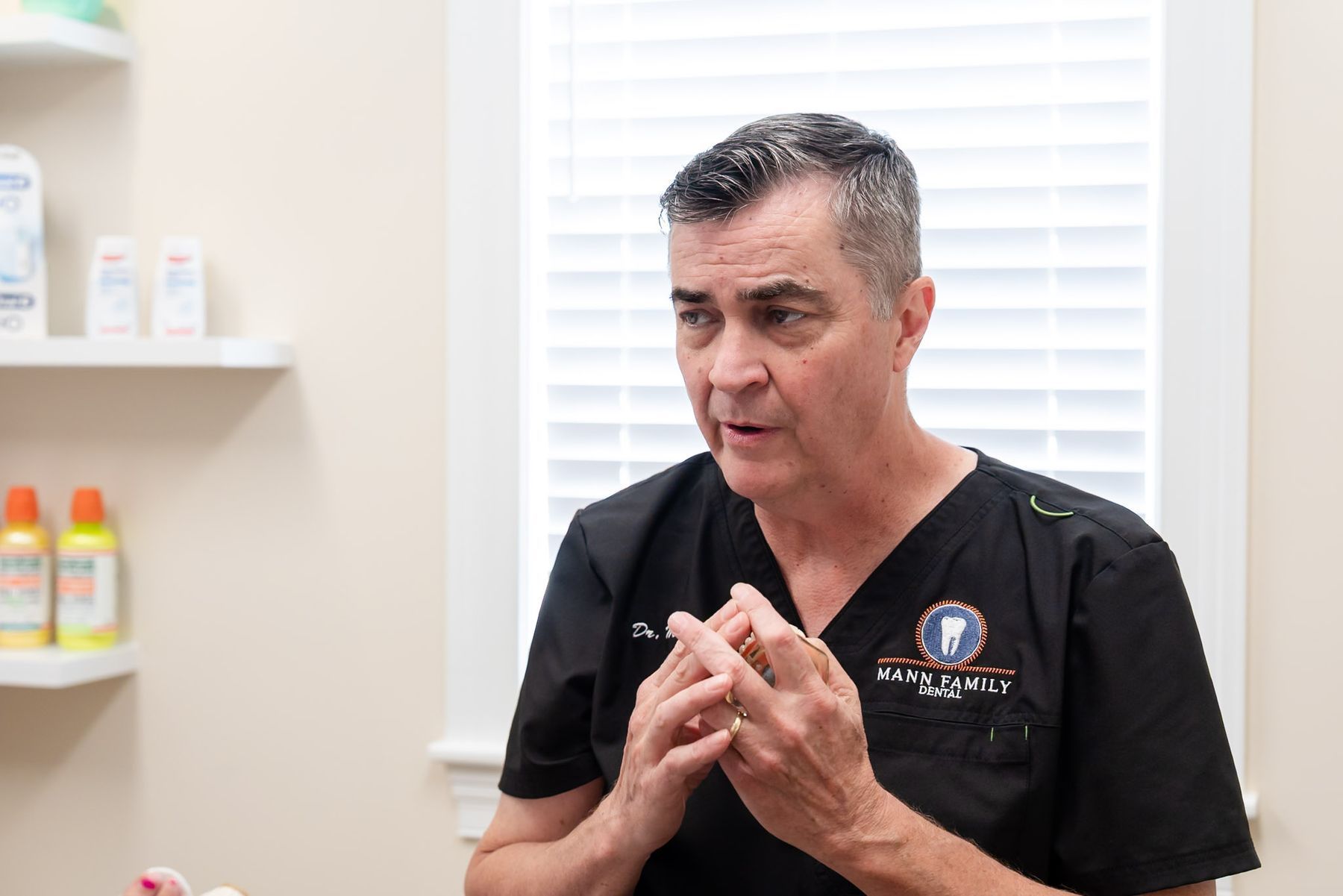
SEO for dentists in 2026 comes down to three things: a complete Google Business Profile, one clear page for every service and location, and a steady flow of recent reviews. Tie them together with consistent structured data and measure booked appointments, not rankings. That same work also feeds the AI answers your patients are starting to read first.
Wondering where your patients are actually finding you
It's easy to feel lost in SEO. The reports are full of terms you didn't learn in dental school, and it's hard to tell whether anything you're paying for brings in a single new patient.
So let's keep this practical. Each section below is something you or your team can check this week.
Treating your Google Business Profile like your front door
For local searches, your Google Business Profile often appears before your website does. Google says local results depend on relevance, distance and prominence, and that complete information, reviews and photos all help ( Google Business Profile Help).
Choosing the right primary category
Your primary category tells Google what you are. Most general practices should use "Dentist." Specialists should choose the category that fits what they actually do, like an orthodontist or a periodontist.
Add secondary categories only for services you truly offer. A category you don't support with real care confuses both Google and patients.
Listing your services
Add every service you provide, in plain words patients use. If you place implants, offer Invisalign or see emergencies, say so in your services list and link each one to its matching page on your website.
Adding real photos, often
Photos of your actual office, team and doctors help patients feel like they know you before they walk in. Skip the stock images — a patient who sees a different office in person loses trust right away.
Add new photos regularly, so your profile shows a practice that's active, not one that hasn't changed in years.
Keeping reviews recent
Review recency matters to patients as much as your star rating. BrightLocal's 2026 survey found 74% of consumers want reviews from the last three months, and Google remains the top review platform at 71% ( BrightLocal).
Giving every service and every location its own page
A single "Services" page with a bulleted list can't rank for "dental implants in [your city]." Google and AI engines need a full page they can match to that search.
One page per service
Each high-value service — implants, Invisalign, veneers, emergency care, sedation, pediatric visits — deserves its own page. Open with a short, direct answer to what the service is and who it helps, then add what to expect, who performs it and real questions patients ask.
Be honest about what you refer out. A sentence explaining why you send root canals to an endodontist builds more trust than pretending to do everything.
One page per location
If you have more than one office, give each its own page with its own address, phone, hours, map, doctors and photos. Two locations sharing one page leaves both of them harder to find.
Using schema to make your facts machine-readable
Schema is structured data that tells search engines exactly who you are, in a format they don't have to guess at. For a practice, the main type is Dentist, which schema.org defines as a kind of LocalBusiness and MedicalBusiness ( Schema.org).
At minimum, your schema should include your practice name, address, phone, hours, website, geo coordinates and links to your official profiles. Add FAQ markup to pages that carry real questions and answers.
The most important rule is consistency. Your name, address and phone number should match exactly across your website, your schema, your Google Business Profile and every directory. "Suite 200" in one place and "#200" in another is the kind of small mismatch worth fixing.
Linking your pages together with purpose
Internal links help patients and search engines move through your site. They also tell Google which pages matter most.
Link from your homepage to your key services, from each service page to related services, and from blog posts to the service page they support. A blog post about implant recovery should link to your implant page with clear words like "dental implants in [city]," not "click here."
Keeping your site fast with Core Web Vitals
Core Web Vitals are Google's measures of how your site feels to use. Google's guidance sets the "good" thresholds at a Largest Contentful Paint within 2.5 seconds, Interaction to Next Paint of 200 milliseconds or less, and Cumulative Layout Shift of 0.1 or less ( web.dev).
In plain terms: your page should load fast, respond the moment someone taps, and not jump around while it loads. Large uncompressed photos, heavy video backgrounds and pop-ups are the usual culprits.
Check your site in Google's free PageSpeed Insights tool, especially on mobile. Most of your patients will find you on their phones.
Building a review strategy that lasts
Reviews do double duty: they help you rank, and they help patients decide. BrightLocal found that 97% of consumers read reviews for local businesses, and 31% now only use businesses rated 4.5 stars or higher, up from 17% the year before ( BrightLocal).
Asking every happy patient
The best time to ask is right after a good visit. A short text with a direct link to your Google review page makes it easy, and a steady pace of reviews keeps your profile current.
Responding with care
Google says helpful replies can help your business stand out ( Google Business Profile Help). Thank people warmly and by first name if they used one.
Never confirm in a reply that someone is your patient, and never mention their treatment — that's protected health information. For a negative review, keep the reply short, kind and general, and invite them to call the office directly.
Measuring calls and booked appointments, not rankings
Rankings move every day and vary by where the searcher is standing. A #1 spot that never makes the phone ring isn't worth much.
Track what actually happens:
- Calls from your Google Business Profile and website, using tracking numbers
- Online booking requests and form fills
- New patients by source, recorded at the front desk or in your practice software
- Which pages people visited before they called
When you can see which pages bring booked patients, you know what to build more of.
How SEO now feeds AI answers
The work above doesn't only help you on Google. It's also the raw material AI answer engines use when a patient asks for a dentist.
BrightLocal's 2026 research found that 45% of consumers use AI tools for local recommendations, up from 6% in 2025 ( BrightLocal). And on Google itself, Pew found users clicked a result in 8% of visits with an AI summary, compared with 15% without one ( Pew Research Center).
AI tools look for clear answers, consistent facts and real reviews. A practice with a strong profile, answer-first service pages and matching schema gives them something to quote. A practice with thin pages and mismatched details gives them a reason to name someone else.
At Digital Floss, the copy we write for practices comes from their own doctors, recorded over two shoot days at the practice, twice a year. Whoever does your SEO, ask them to show you booked patients, not just positions.
Frequently asked questions
How long does dental SEO take to work?
Most practices see early movement on their Google Business Profile within a few weeks of fixing categories, services, photos and reviews. Website pages usually take longer to rank, often several months, depending on your market and competition. Track calls and booked appointments from the start, so you can see progress before rankings settle.
What is the most important SEO factor for a dentist?
For local searches, your Google Business Profile carries the most weight: correct primary category, complete services, real photos and recent reviews. Google names relevance, distance and prominence as its main local factors. Your website supports all three, especially with one strong page for each service and location.
Do dentists need a blog for SEO?
A blog helps when each post answers a real patient question and links to the matching service page. It doesn't help when posts repeat each other or cover topics no patient searches. A few strong, focused articles tied to your services will do more than a calendar full of filler posts.
What schema should a dental practice use?
Use the Dentist type, which schema.org lists under LocalBusiness and MedicalBusiness. Include your name, address, phone, hours, geo coordinates, website and official profile links, all matching your Google Business Profile exactly. Add FAQ markup to pages with real questions and answers, and keep everything consistent across every location page.
Should I respond to every Google review?
Responding to reviews is a good habit, and Google says helpful replies can help your business stand out. Keep replies warm and general. Never confirm that someone is your patient or mention their treatment, since that's protected health information. For negative reviews, invite the person to call the office directly.
Sources
- BrightLocal, "Local Consumer Review Survey 2026" (1,002 US adults, published Feb 2026): https://www.brightlocal.com/research/local-consumer-review-survey/
- BrightLocal, AI trust findings, 2026: https://www.brightlocal.com/research/lcrs-ai-trust/
- Pew Research Center, "Google users are less likely to click on links when an AI summary appears in the results" (July 22, 2025): https://www.pewresearch.org/short-reads/2025/07/22/google-users-are-less-likely-to-click-on-links-when-an-ai-summary-appears-in-the-results/
- Google Business Profile Help, "Tips to improve your local ranking on Google": https://support.google.com/business/answer/7091
- web.dev, "Web Vitals": https://web.dev/articles/vitals
- Schema.org, "Dentist": https://schema.org/Dentist