

Insights · Social media
Social Media Marketing for Dentists That Fills the Schedule
 Dr. Anissa Broussard, DMD
Founder, Digital Floss ·
· 6 min read
Dr. Anissa Broussard, DMD
Founder, Digital Floss ·
· 6 min read
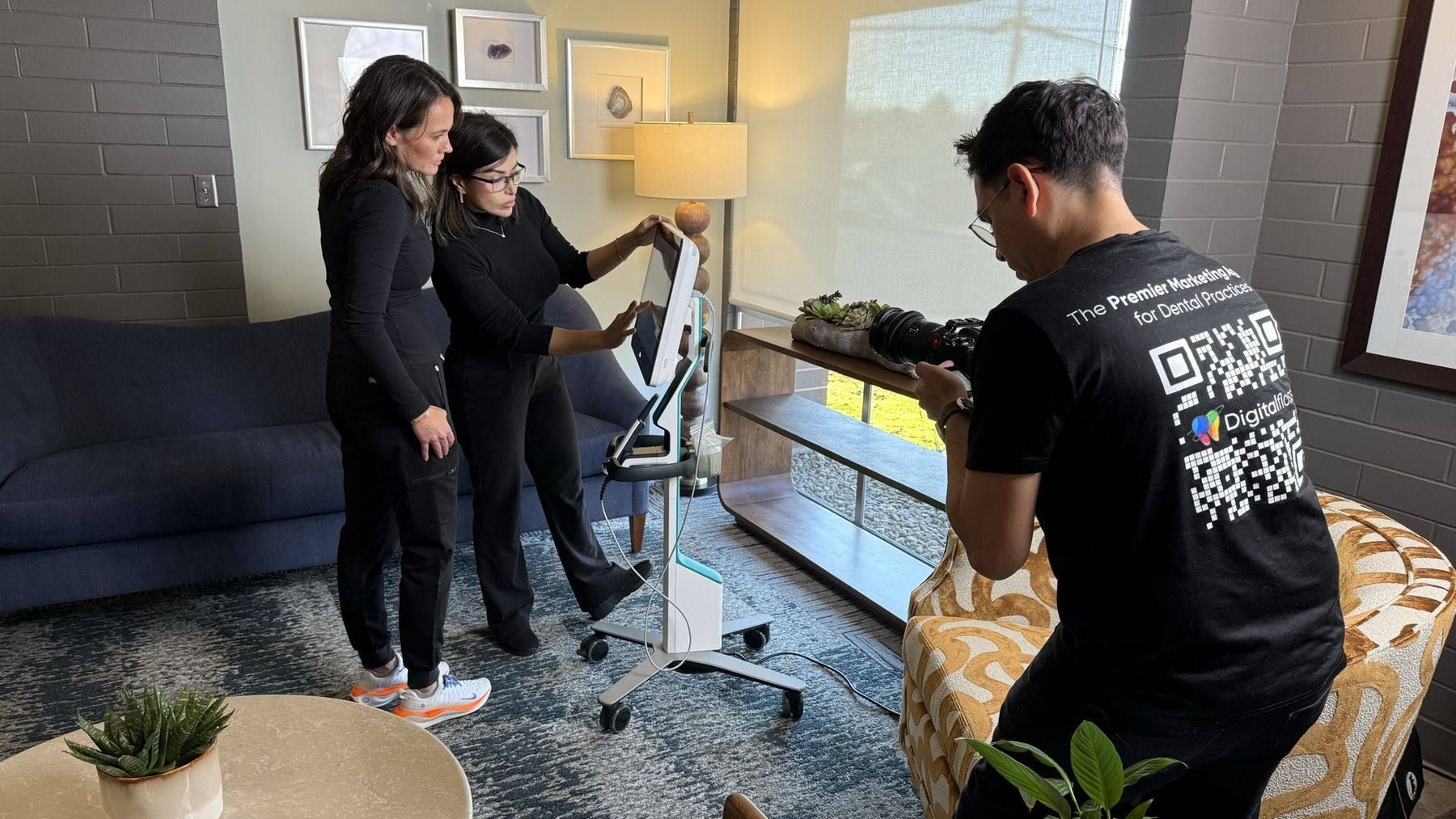
Social media works for dental practices when it shows the real doctor and team on video, posts on a steady rhythm patients can count on, and is measured by booked appointments, not likes. Facebook and YouTube reach the most adults, Instagram and TikTok reach younger patients, and paid ads put your best videos in front of the neighborhoods you serve. Every patient who appears on camera needs to give written permission first.
Feeling like you're posting into the void
Most dentists I meet have tried social media. Someone on the team posted for a while, the likes trickled in, and nobody could point to a single new patient it brought through the door. So it slid down the list.
That frustration usually isn't about social media itself. It comes from posting the wrong things, on no real rhythm, and measuring the wrong number.
Choosing where your patients actually are
You don't need to be everywhere. You need to be where your patients spend time, and Pew Research Center's 2025 survey gives a clear picture of US adults ( Pew Research Center):
| Platform | Share of US adults who use it | Where it fits for a practice |
|---|---|---|
| YouTube | 84% | Longer videos: meet the doctor, what to expect for implants or Invisalign |
| 71% | Parents and older patients; community posts, reviews, events, local ads | |
| 50% | Short video of your team, office life, real smiles with consent | |
| TikTok | 37% | Younger patients; light, personal, behind-the-scenes clips |
About half of US adults visit Facebook and YouTube daily, according to the same research. For most practices, I'd start with Instagram and Facebook together, since one short video can run on both, and add YouTube for the longer explainers patients watch before a big decision.
TikTok can work well, especially for practices with younger patients or a team that loves being on camera. It's a good place to test once the basics are running.
Showing your real team on video
Patients are choosing people. The fastest way to earn their trust before they ever call is to let them meet you.
The videos that work best for practices tend to be simple:
- The doctor talking to camera about something patients worry about, like what a root canal actually feels like today.
- Team introductions, so the hygienist and front desk feel familiar on the first visit.
- A walk through the office, from the front door to the treatment chair.
- Patient stories, told by the patient, with signed consent.
- Answers to the questions your front desk hears every day.
Polished graphics with a tooth emoji and "Happy National Flossing Day" don't do much on their own. Real faces in your real office do, because no stock clip can stand in for your actual team.
Dental social media ideas for a month of posts
If you're staring at a blank calendar, here's a simple rotation to build from:
| Week | Video idea | Supporting post |
|---|---|---|
| 1 | Doctor answers one common patient question | A recent five-star review, shared with the reviewer's permission |
| 2 | Meet a team member | Office photo or a short behind-the-scenes clip |
| 3 | What to expect for one procedure | A community event, local partner or school visit |
| 4 | Patient story, with written consent | A reminder about open appointment times or a new service |
Repeat what gets the most saves, shares and calls. Drop what doesn't.
Posting on a rhythm you can keep
"How often should a dentist post?" is one of the first questions I get. The best answer is: as often as you can keep up with good content, week after week.
Buffer's analysis of 2.1 million Instagram posts from more than 102,000 accounts found that posting three to five times a week more than doubled follower growth compared with posting once or twice ( Buffer). More posts still helped, but the biggest jump in reach came from moving off one or two a week, and accounts that went quiet tended to stall.
For most practices, three to five posts a week on Instagram and Facebook is a realistic target, with stories in between. Consistency beats bursts. Two good weeks followed by a silent month undoes a lot of the progress.
Protecting patient privacy and consent
This is the part that can get a practice into real trouble, so I want to be clear about it.
HIPAA's Privacy Rule requires a patient's written authorization before their protected health information is used for marketing ( HHS). HHS also lists "full-face photographs and any comparable images" among the identifiers that make health information identifiable ( HHS). A smile photo taken in your chair is health information tied to a face.
In practice, that means:
- Get a signed, written authorization before any patient appears in a photo, video, before-and-after or story. Have your compliance advisor review the form.
- Watch the background. Charts, screens and other patients in the frame can be a disclosure too.
- Never confirm someone is a patient when you reply to a comment or review. HHS settled with a California dental practice in December 2022 for $23,000 after it disclosed patient information in responses to online reviews. The OCR director put it simply: "This is a clear NO" ( HHS).
- Disclose paid or gifted posts. If you give a patient or local creator anything of value to post about your practice, the FTC expects that relationship to be disclosed ( FTC).
Responding to reviews still matters — BrightLocal found 89% of consumers expect business owners to respond ( BrightLocal). Thank people warmly, keep it general, and take anything specific offline.
Using organic and paid together
Organic posts are for the people who already know you: current patients, their families and followers. They build loyalty and give new patients something to look at when they check you out.
Paid ads are how you reach the neighbors who've never heard of you. On Facebook and Instagram, you can put your best-performing videos in front of people in the specific neighborhoods around your office.
The two feed each other. A video that does well organically is usually a strong ad, and an ad that brings someone to your profile only works if the profile shows a practice worth visiting.
Measuring social media by booked patients
Likes and followers are nice, but they don't pay your team. The number that matters is how many new patients came from social, and what each one cost.
To get there:
- Ask every new patient how they found you, and record the answer in your practice software.
- Use a separate booking link or phone number for social profiles and ads, so you can see which calls came from them.
- Review monthly: posts published, ad spend, new-patient calls from social, and appointments booked.
- Look at which videos people mention. Patients often say, "I saw your video about…" — that tells you what to make more of.
If social is part of a bigger plan, this same tracking lets you compare it fairly against Google Ads and SEO.
Knowing when to hire a dental social media agency
Doing it in-house can work if someone on your team loves it, has protected time for it and is comfortable on camera. It tends to break down when posting depends on whoever has a free minute.
It's worth bringing in help when:
- Posting keeps stopping and starting.
- Nobody has time to film, or the footage you have doesn't look like your practice.
- You want to run ads and need someone to manage targeting, budget and tracking.
- You can't tell what's working, because nothing ties posts to booked patients.
When you talk to agencies, ask to see real practices they post for, ask who films the video, ask how they handle patient consent, and ask what they report each month. My guide on how to choose a dental marketing agency has a fuller list of questions.
At Digital Floss, we manage social media for dental practices only, with a crew that films inside each office, and we run Meta video ads and neighborhood Visibility Campaigns alongside it. Whoever you work with, ask for new patients booked from social every month.
Frequently asked questions
How often should a dentist post on social media?
For most practices, three to five posts a week on Instagram and Facebook is a realistic, effective target. Buffer's study of 2.1 million Instagram posts found that rhythm more than doubled follower growth compared with one or two posts weekly. Consistency matters most, so choose a pace your team can keep for months.
What should a dental practice post on social media?
Post short videos of your real doctor and team, answers to common patient questions, what to expect for key procedures, office tours, and patient stories shared with written consent. Mix in reviews, community events and team moments. Real faces in your real office build more trust than stock graphics or holiday posts.
Which social media platform is best for dentists?
Facebook and YouTube reach the most US adults, at 71% and 84% according to Pew Research Center. Instagram reaches half of adults and suits short team videos, while TikTok skews younger. Most practices do well starting with Instagram and Facebook together, then adding YouTube for longer procedure explainers.
Can dentists post patient photos on social media?
Only with the patient's signed, written authorization. HIPAA generally requires written authorization before health information is used for marketing, and full-face photos count as identifiers. Have your compliance advisor review the consent form, check backgrounds for charts or screens, and never confirm someone is a patient when replying online.
How do I know if dental social media marketing is working?
Measure booked new patients, not likes. Ask every new patient how they found you, use separate booking links or phone numbers for social and ads, and review monthly how many appointments came from social and what they cost. Notice which videos patients mention, then make more of those.
Sources
- Pew Research Center, "Americans' Social Media Use 2025" (Nov 20, 2025): https://www.pewresearch.org/internet/2025/11/20/americans-social-media-use-2025/
- Buffer, "How Often Should You Post on Instagram? What Data From 2 Million Posts Tells Us": https://buffer.com/resources/how-often-to-post-on-instagram/
- U.S. Department of Health and Human Services, "Marketing" (HIPAA Privacy Rule guidance): https://www.hhs.gov/hipaa/for-professionals/privacy/guidance/marketing/index.html
- U.S. Department of Health and Human Services, "Guidance Regarding Methods for De-identification of Protected Health Information": https://www.hhs.gov/hipaa/for-professionals/privacy/special-topics/de-identification/index.html
- U.S. Department of Health and Human Services, "HHS Civil Rights Office Enters Settlement with Dental Practice over Disclosures of Patients' Protected Health Information" (Dec 14, 2022): https://www.hhs.gov/about/news/2022/12/14/hhs-civil-rights-office-enters-settlement-with-dental-practice-over-disclosures-of-patients-protected-health-information.html
- Federal Trade Commission, "Disclosures 101 for Social Media Influencers": https://www.ftc.gov/business-guidance/resources/disclosures-101-social-media-influencers
- BrightLocal, "Local Consumer Review Survey 2026" (1,002 US adults): https://www.brightlocal.com/research/local-consumer-review-survey/