

Insights · Strategy
Dental Marketing Strategies for 2027, in the Order That Pays
 Dr. Anissa Broussard, DMD
Founder, Digital Floss ·
· 8 min read
Dr. Anissa Broussard, DMD
Founder, Digital Floss ·
· 8 min read
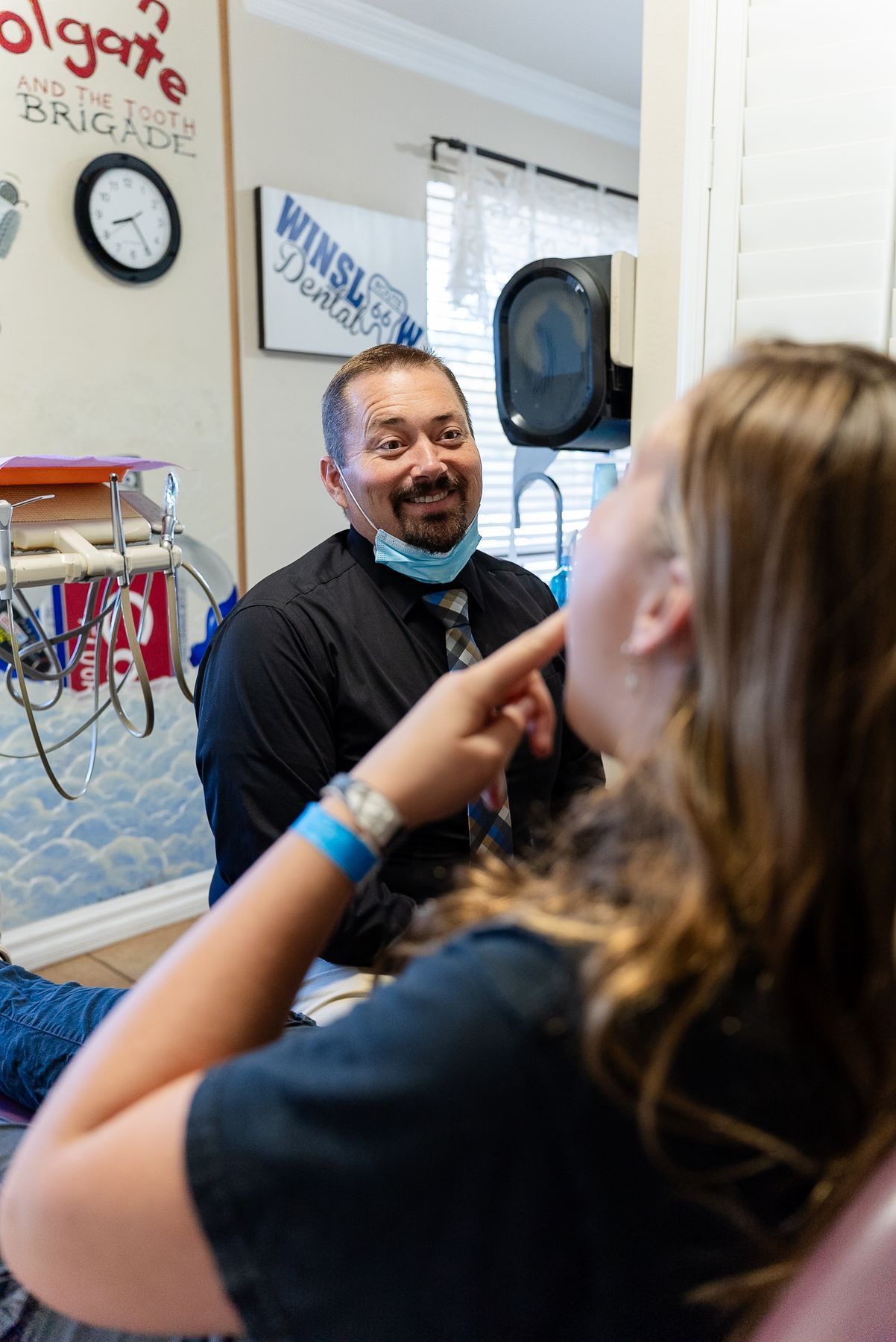
The dental marketing strategies that work in 2027 are the ones done in the right order: fix the foundation first (phones, website, Google Business Profile and reviews), then make your practice findable on Google and AI answer engines, then familiar through video and neighborhood visibility, then capture demand with Google Ads, and finally keep the patients you've earned. Each layer makes the next one cheaper, and skipping ahead to ads before the foundation is ready is the most expensive mistake I see.
Feeling pulled in ten directions at once
Every week someone tells you the one thing you have to be doing — TikTok, AI, Google Ads, a new website — and each of them is a little bit right. Without an order, most practices end up doing a bit of everything and wondering why the schedule still has holes in it.
The pressure is real. In the ADA Health Policy Institute's third-quarter 2025 update, chief economist Dr. Marko Vujicic said, "we're seeing continued declines in appointment wait times. Capacity is opening up and dentists are less busy" ( ADA News). More open chairs across the country means more practices competing for the same new patients.
This is the order I'd follow if I owned a practice today, with a deeper guide linked for each step.
Layer 1: Fixing the foundation before you pay for reach
Everything else you do sends people to four places: your phone, your website, your Google Business Profile and your reviews. If any of those lets a patient down, every dollar spent upstream leaks out.
Answering every new-patient call like it matters most
A new patient who reaches voicemail usually calls the next practice on the list, and you never know they existed. Record calls (with the right notice), listen to a handful each week, and coach to a simple goal: answer warmly, learn what the caller needs, and offer an appointment before hanging up. It costs almost nothing and makes every other channel work harder.
A website that answers the patient's real question
Patients arrive anxious, comparing and short on time, so your site should show them the real doctor and team, explain what a visit feels like, and make booking easy from a phone. That's the thinking behind our Signature Story Sites, and the full checklist lives in my guide to dental website design.
A complete Google Business Profile
Google says customers are 2.7 times more likely to consider a business reputable when they find a complete Business Profile, and 70% more likely to visit ( Google Business Profile Help). Fill in every field: correct categories, hours (including holiday hours), services, real photos of your office and team, and the booking link.
A steady flow of real reviews
BrightLocal's 2026 survey found 68% of consumers want at least a 4-star rating, and 74% look for reviews written in the last three months ( BrightLocal). A practice with 300 reviews and nothing new since spring looks quieter than it is.
Ask every patient, the same way, every day, and reply to what they write. My guide to dental reputation management covers how to ask without breaking Google's rules and how to respond without breaking HIPAA.
Layer 2: Being findable on Google and in AI answers
Once the foundation holds, you want to show up when someone nearby searches "dentist near me" or asks ChatGPT for a recommendation.
Local SEO for the searches that fill chairs
Google weighs relevance, distance and prominence, and prominence draws on links to your site and how many reviews you have ( Google). In practice that means a plain-language service page for each treatment you want more of, consistent listings and steady reviews — the full playbook is in my guide to SEO for dentists.
Showing up when patients ask AI
Patients are asking AI tools who to see. Pew found that 34% of US adults had used ChatGPT by early 2025, roughly double the share in 2023, and 58% of adults under 30 had ( Pew Research Center). BrightLocal reports that use of ChatGPT and other AI tools for local recommendations rose from 6% to 45% in a single year ( BrightLocal).
AI tools lean on what the web already says about you: your website, your profile, your reviews and the directories that list you. I wrote a whole book on this, FOUND: How AI Chose Your Competitors , and the short version is in my guide to AI search for dentists.
How AI search changes the marketing mix
Pew's study of real browsing found that 18% of Google searches in March 2025 produced an AI summary. When one appeared, people clicked a regular result in 8% of visits, compared with 15% without one, and they clicked a link inside the summary itself in just 1% of visits ( Pew Research Center).
For a dental practice, that shifts where your attention should go:
| What's changing | What it means for you |
|---|---|
| Fewer clicks to regular listings when an AI summary appears | Your Google Business Profile, reviews and paid ads carry more of the first impression |
| AI tools summarize what others say about you | Review volume, recency and your replies shape the summary patients read |
| 82% of consumers read AI-generated review summaries ( BrightLocal) | A few unanswered complaints can color the whole summary |
None of this makes SEO obsolete. It means the facts about your practice need to be clear and consistent everywhere, because the AI reads all of it — the focus of our AI visibility work.
Layer 3: Becoming familiar before patients need you
Most people don't need a dentist on the day they see your name, and familiarity is what makes them choose you when they do.
Video that lets patients meet you first
A short video of you explaining a procedure, or your hygienist greeting a nervous patient, does what no stock photo can: it lets someone feel what your office is like before they walk in. My guide to dental video marketing covers what to film and where to use it.
Social media that feels like your practice
Social works best as a window into the real practice — your team, your patients' good days (with consent), your community — far more than as a billboard. See social media marketing for dentists for a posting rhythm a busy office can keep up with.
Neighborhood visibility with Meta ads
Facebook and Instagram ads let you put that video in front of people who live and work near your office, so your face is familiar long before they search. My guide to Facebook ads for dentists explains targeting, creative and what to measure. If implants are your growth goal, dental implant marketing goes deeper on that patient's longer decision.
Layer 4: Capturing demand with Google Ads
Google Ads reaches people searching for care right now, which makes it the fastest lever once the foundation is solid. LocaliQ's 2024–2025 benchmarks put general dentistry at $7.03 per click and $84.77 per lead ( LocaliQ).
Ads amplify whatever sits underneath them: a strong front desk, a clear landing page and healthy reviews make each click worth more. Budgets, campaign types and tracking are all covered in my guide to Google Ads for dentists.
Layer 5: Keeping and reactivating the patients you've earned
The cheapest new appointment is usually a patient who already trusts you. The CDC reports that 66.7% of US adults had a dental exam or cleaning in the past year ( CDC), which means about a third did not — and some of them are already sitting in your own patient records.
- Recall: confirm every hygiene patient's next visit before they leave the chair, and follow up quickly on anyone who doesn't book.
- Reactivation: reach out personally to patients who haven't been seen in over a year — a note from an office they know lands differently than an ad.
- Referrals: make it easy for happy patients to send a friend, and thank them every time.
- Community: school visits, local sponsorships and charity days build a reputation that shows up in reviews.
A one-page 90-day dental marketing plan
Use this as a starting point and adjust the pace to your team's capacity.
| Weeks | Focus | What to do | How you'll know it's working |
|---|---|---|---|
| 1–2 | Phones and front desk | Measure missed calls; record and review new-patient calls; set a booking script | Share of new-patient calls answered and booked |
| 3–4 | Google Business Profile and reviews | Complete every profile field; start asking every patient for a review; reply to all reviews | New reviews per week; response rate |
| 5–6 | Website | Fix mobile booking, page speed and the pages for your top three treatments | Online booking requests and calls from the site |
| 7–8 | Findability | Publish or improve service pages; clean up directory listings; check what AI tools say about you | Local rankings for priority searches; AI mentions |
| 9–10 | Familiarity | Film a first batch of short videos; set a realistic social rhythm; test a neighborhood Meta campaign | Video views from local audiences; profile visits |
| 11–12 | Demand capture and retention | Launch tracked Google Ads for one high-value treatment; run a recall and reactivation push | Cost per booked patient; reactivated appointments |
Keep doing the earlier rows while you add the later ones. Reviews and phone coaching never really end.
Measuring what actually matters
Clicks and likes are easy to misread. Watch the numbers closest to your schedule: new-patient calls answered and booked, new patients by source, cost per booked patient for each paid channel, review count and recency, and recall appointments.
How much to spend, and how to judge return, is covered in my guide to dental marketing budget and ROI. If you're weighing outside help, how to choose a dental marketing agency lists the questions I'd ask.
Dental marketing ideas that fit this plan
A few ideas to start this month, each tied to a layer above:
- Have your front desk ask every patient for a review at checkout and text them the link before they reach the car.
- Film a 60-second "meet the doctor" video on your phone this week and pin it to your Google profile and social pages.
- Ask ChatGPT and Google's AI Mode who the best dentist in your town is, and note which sources they cite.
- Pull a list of patients overdue for hygiene and have someone they know call them.
Where Digital Floss fits
I practiced dentistry for 20 years before founding Digital Floss, and we work only with dental practices. Our crew films on site, we build Signature Story Sites, run social media, Meta video ads and neighborhood Visibility Campaigns, handle Google Ads with our partner Rise, and work on AI visibility. Whoever helps you, follow the order above and ask for cost per booked patient. If you'd like to talk it through, get in touch with our team.
Frequently asked questions
What is the best marketing strategy for a dental practice?
The best strategy is doing the right things in order. Start with the foundation: answered phones, a clear website, a complete Google Business Profile and steady reviews. Then build findability through SEO and AI visibility, familiarity through video and social, and demand capture through Google Ads. Each layer makes the next one work better and cost less.
How can I get more dental patients quickly?
The fastest wins usually sit inside the practice. Answer and book every new-patient call, reactivate patients overdue for hygiene, and ask every patient for a review. For new reach, tracked Google Ads can bring calls within days, but only after the phones, landing page and reviews are ready to turn those calls into booked appointments.
What should a dental marketing plan include?
A dental marketing plan should include clear goals for new patients, the channels you'll use in priority order, who owns each task, and how you'll measure results. Cover the foundation, findability, familiarity, demand capture and retention. Track new patients by source and cost per booked patient each month, then adjust based on what those numbers show.
How is AI search changing dental marketing in 2027?
AI search is shifting attention away from regular listings. Pew found people clicked results in 8% of visits with an AI summary, versus 15% without one. That puts more weight on your Google Business Profile, reviews, consistent listings and service pages that answer patient questions clearly, because AI tools draw on all of those sources.
How much should a dentist spend on marketing?
There's no single right number for every practice. Start from your new-patient goal, what each patient is worth over time and your capacity to see them, then work backward to a budget. Fund the foundation first, add paid channels once tracking is in place, and judge every channel by cost per booked patient.
Sources
- Google Business Profile Help, "Tips to improve your local ranking on Google": https://support.google.com/business/answer/7091
- Google Business Profile Help, "Complete your Business Profile": https://support.google.com/business/answer/10515606
- BrightLocal, "Local Consumer Review Survey 2026" (1,002 US consumers): https://www.brightlocal.com/research/local-consumer-review-survey/
- Pew Research Center, "Google users are less likely to click on links when an AI summary appears in the results" (July 22, 2025): https://www.pewresearch.org/short-reads/2025/07/22/google-users-are-less-likely-to-click-on-links-when-an-ai-summary-appears-in-the-results/
- Pew Research Center, "34% of U.S. adults have used ChatGPT, about double the share in 2023" (June 25, 2025): https://www.pewresearch.org/short-reads/2025/06/25/34-of-us-adults-have-used-chatgpt-about-double-the-share-in-2023/
- ADA News, "Fiscal squeeze on dental practices continues" (October 2025): https://adanews.ada.org/ada-news/2025/october/fiscal-squeeze-on-dental-practices-continues/
- LocaliQ, "Healthcare Search Advertising Benchmarks" (Oct 2024–Sep 2025): https://localiq.com/blog/healthcare-search-advertising-benchmarks/
- CDC National Center for Health Statistics, "FastStats: Oral and Dental Health": https://www.cdc.gov/nchs/fastats/dental.htm